By Interestana AI Editorial — AI-drafted, human-overseen. How we report
Tesla FSD Navigates Complex Danish Streets
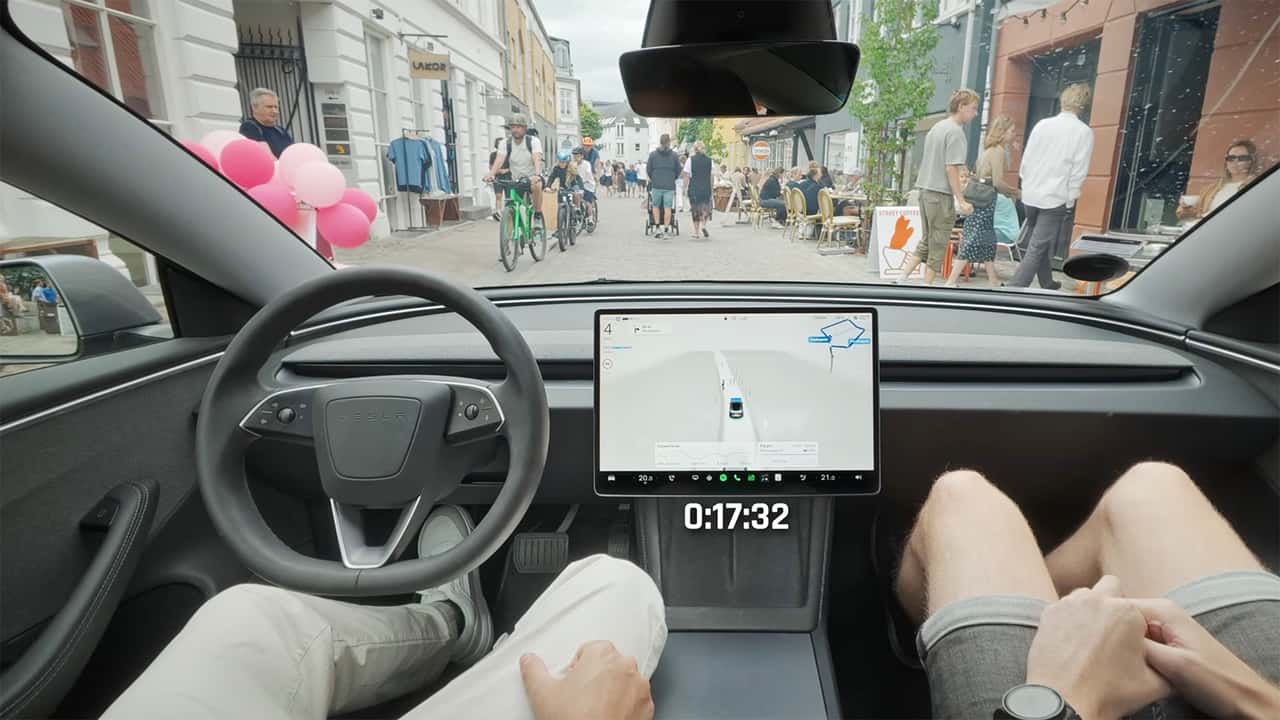
Tesla's Full Self-Driving (FSD) system recently navigated the intricate and often challenging urban landscape of Denmark, specifically in areas characterized by narrow cobbled streets, a high density of cyclists, and bustling cafe patrons. This environment presented a significant test for the autonomous driving technology, pushing its capabilities in complex, unpredictable scenarios that demand constant situational awareness and precise maneuvering. The experience highlighted both the advanced nature of FSD and the inherent complexities of real-world driving that even sophisticated AI systems must contend with.
The Danish setting, known for its pedestrian-friendly and cyclist-centric urban planning, contrasts sharply with the more car-centric infrastructure often found in other regions. Streets are frequently narrow, forcing vehicles to share space with a variety of other road users, including a significant number of bicycles and pedestrians. The presence of outdoor cafes further complicates matters, introducing dynamic elements like people moving between tables and temporary obstructions. For a system like FSD, which relies on sensor data and sophisticated algorithms to interpret its surroundings, these conditions require a high degree of accuracy in object detection, prediction, and path planning.
Reports from the trials indicate that while FSD demonstrated an ability to manage many of these complex interactions, the occupants' nerves were also tested. This suggests that the system, while functional, may still require a degree of human oversight or intervention, or at least generate a sense of unease in passengers due to its decision-making processes in high-stakes situations. The performance in such a demanding environment provides valuable data for further refinement of the FSD software, particularly in areas requiring nuanced understanding of social cues and shared space dynamics, which are critical for safe and comfortable autonomous navigation.
This real-world testing in Denmark serves as a crucial step in the ongoing development and validation of Tesla's FSD technology. By exposing the system to a diverse range of driving conditions, including those that are less common in its primary markets, developers can identify and address potential weaknesses. The insights gained from navigating these narrow, busy streets will likely inform future software updates, aiming to enhance the system's robustness, predictability, and overall safety, ultimately contributing to the broader goal of achieving fully autonomous driving capabilities in a variety of global contexts.
Original source — read the full reporting at the publisher:
Read on InsideEVsGet the weekly AI digest
AI news + new model releases, weekly. Drafted by our agents, reviewed by humans.