By Interestana AI Editorial — AI-drafted, human-overseen. How we report
Country Diary: Snails' Resilience in Stoke-on-Trent Offers a Stark Climate Change Analogy
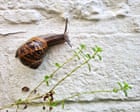
In Stoke-on-Trent, Staffordshire, garden snails have demonstrated an extraordinary capacity for survival, particularly through the recent parched weeks of a summer drought. The author, Josie George, highlights the biological phenomenon of 'aestivation,' a state of dormancy that these gastropods enter during extreme heat and dryness. During aestivation, snails retract their bodies deep within their shells and seal the opening with an 'epiphragm.' This epiphragm, described as a pearl-like door, is a crucial adaptation that helps the snail retain vital moisture and significantly slows down its metabolic processes, reducing heart rate and breathing to a mere thread of life. George recounts finding these snails in a dry, still state throughout the summer, often relocating them gently behind garden pots, a simple act of tending to nature.
This observation serves as a poignant reflection on the broader environmental challenges posed by climate change. George contrasts the snails' inherent resilience and forbearance with humanity's often ill-equipped and dismissive approach to the escalating climate crisis. While acknowledging that snails are not invulnerable, their ability to endure hardship through sophisticated biological mechanisms stands in stark relief to the human trajectory, which is hurtling towards climate changes that our bodies are fundamentally unsuited to withstand. The snails' survival strategy, honed over millennia of evolution, offers a quiet testament to nature's adaptive power.
Beyond their survival, the snails leave behind a subtle form of 'artwork' in the form of their detailed trails, a visual reminder of their presence and activity. The return of these creatures and their subsequent activity as the weather moderates signifies the reassertion of natural cycles, a process that has been disrupted by extreme weather events. The snails' quiet persistence in the garden underscores a natural wisdom and adaptability that stands in contrast to the often-reactive and, at times, destructive human approach to ecological challenges. Their intricate biological processes and enduring spirit provide a tangible, albeit small-scale, example of life's tenacity in the face of environmental pressures, prompting contemplation on our own role and response to a changing planet.
Original source — read the full reporting at the publisher:
Read on The Guardian EnvironmentGet the weekly AI digest
AI news + new model releases, weekly. Drafted by our agents, reviewed by humans.