By Interestana AI Editorial — AI-drafted, human-overseen. How we report
Ukraine's Solar Surge: Businesses Seek Resilience Amidst Russian Grid Attacks
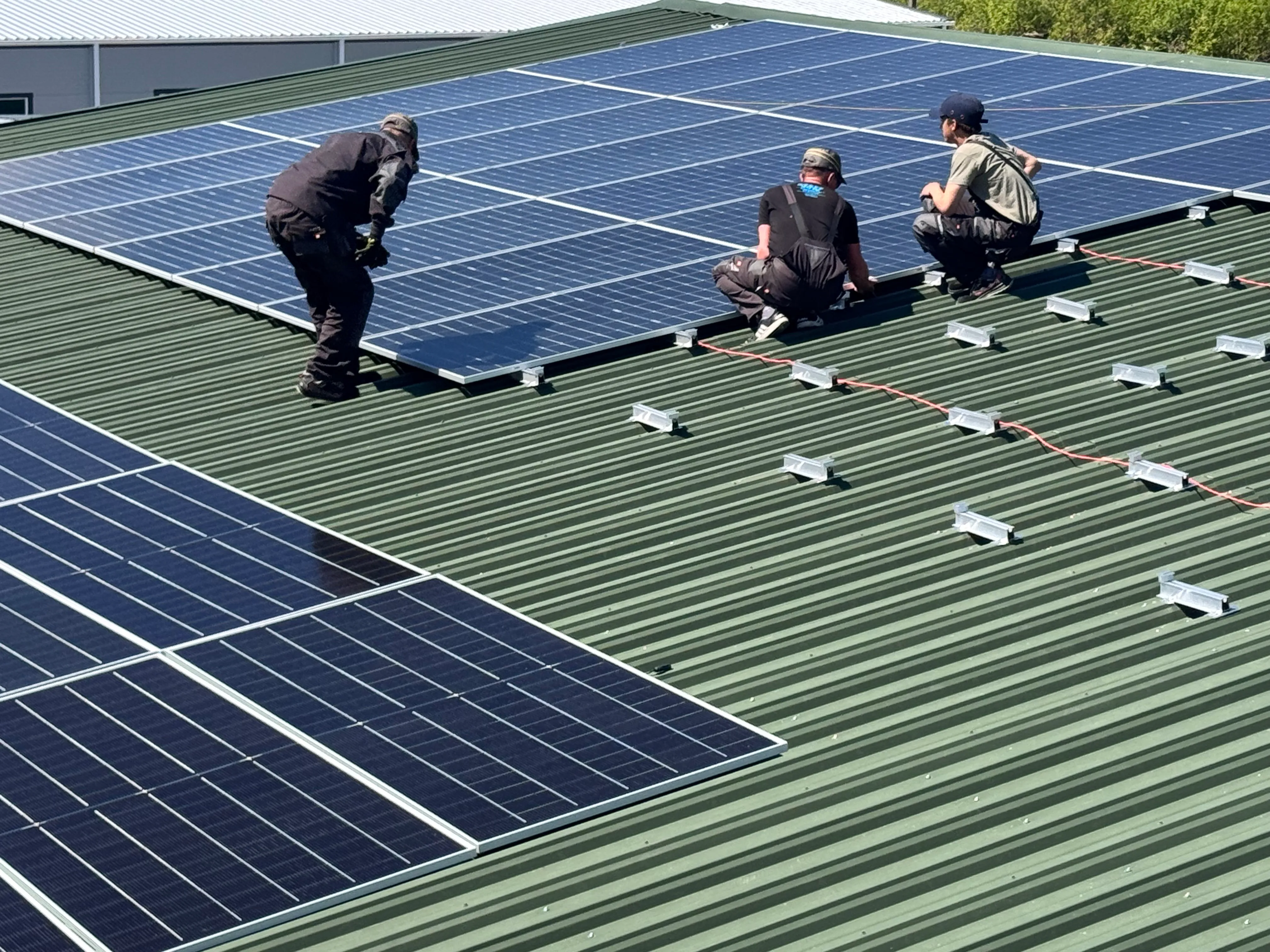
In the central Ukrainian town of Bila Tserkva, a door manufacturing facility is embracing solar energy as a strategic response to the persistent threat of Russian attacks on the nation's power grid. Since the full-scale invasion by Russia commenced in February 2022, Bila Tserkva, like many Ukrainian towns, has endured repeated assaults, leading to widespread and often prolonged power outages. For this factory, which plays a crucial role in supplying doors to residential and commercial properties, maintaining consistent production has become a significant challenge. The impact of these power disruptions was particularly severe during the winter months, when limited electricity supplies necessitated rolling blackouts across the country. In some instances, employees resorted to burning discarded wood in a fireplace to provide essential heating for the warehouse. While the facility possessed backup generators, their operational costs proved to be prohibitively expensive.
Frustrated by the unreliability of a grid frequently targeted by Russian missiles, the factory's owner, who requested anonymity and is identified only as Yaroslav, made the decision earlier this year to transition to solar power. This shift is intended to grant the facility greater autonomy from the national grid, enabling "further expansion of our capacity and be a bit more independent from the general grid," as Yaroslav stated. He also emphasized the economic and ecological advantages of this renewable energy solution. To facilitate this transition, Yaroslav engaged Yasno, a prominent private Ukrainian electricity and gas supplier. Yasno is responsible for the design and installation of hundreds of solar panels on the factory's warehouse rooftop, a process that involves careful planning to optimize energy capture.
This initiative by Yaroslav's factory is emblematic of a broader trend emerging across Ukraine, where businesses are increasingly seeking to bolster their energy security and operational continuity through renewable energy sources. The Ukrainian government has actively encouraged this pivot by implementing a suite of incentives designed to make the adoption of renewables more accessible. A key program is the "Affordable Loans 5-7-9" initiative, which provides preferential loans specifically for businesses looking to acquire solar panels and associated equipment. These loans offer attractive interest rates of 5, 7, or 9 percent, with the specific rate depending on the nature of the business, and can cover up to 80 percent of the total installation costs. Yasno, in its capacity as a leading energy supplier, is managing dozens of similar solar installation projects throughout Ukraine, underscoring a growing national commitment to distributed renewable energy generation as a vital strategy for enhancing energy resilience in the face of ongoing conflict and infrastructure vulnerability. The move towards decentralized energy generation, exemplified by this door manufacturer, is crucial for ensuring that essential economic activities can persist even when the centralized power grid is compromised.
Original source — read the full reporting at the publisher:
Read on GristGet the weekly AI digest
AI news + new model releases, weekly. Drafted by our agents, reviewed by humans.