By Interestana AI Editorial — AI-drafted, human-overseen. How we report
Yayoi Kusama's Psychedelic Art Best Experienced in High Doses
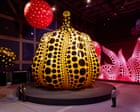
The art of Yayoi Kusama, a Japanese artist who achieved global superstardom, is best understood and appreciated when experienced in high doses, particularly her large-scale installations. This perspective suggests that the immersive and often dizzying effect of her signature polka dots and repetitive motifs, as seen in her iconic octopus and giant pumpkin works, creates a "giddy sensory overload" that is difficult to resist. The author recounts a personal experience at the Museum of Modern Art (MoMA) in New York, where, after viewing significant works by abstract expressionists like Jackson Pollock and Piet Mondrian, Kusama's dot patterns initially appeared static and predictable, failing to evoke a strong emotional response. This initial skepticism highlights a potential disconnect between the artist's intent and the viewer's reception when installations are not encountered in their full, overwhelming context.
Kusama's artistic career, which spanned decades and saw her rise from relative obscurity to international fame, is marked by a consistent exploration of themes such as infinity, obsession, and self-obliteration through her distinctive visual language. Her work often involves the viewer's direct participation, drawing them into environments that challenge perceptions of space and reality. The "psychedelic" quality of her art, as described, stems from the intense visual stimulation provided by the pervasive use of dots, which can create a disorienting yet captivating experience. This approach aims to engulf the observer, blurring the lines between the artwork and the individual, and encouraging a state of heightened awareness or even a trance-like immersion.
Despite initial reservations, the argument presented is that the true power of Kusama's installations lies in their cumulative impact. A "big dose" of her art, meaning a comprehensive engagement with her most ambitious and immersive pieces, is what allows the viewer to fully grasp the intended effect. This contrasts with a more casual or fragmented viewing, which might lead to an underestimation of the work's profound psychological and sensory dimensions. The author's past debate with Peter Gabriel, a proponent of Kusama's art, underscores the subjective nature of art appreciation but also points to a common appreciation for the artist's unique vision, even if the critical lens initially struggles to connect with it. The review implies that a deep dive into Kusama's oeuvre is necessary to unlock its full potential for sensory and emotional engagement, moving beyond a superficial appreciation of her iconic motifs.
Original source — read the full reporting at the publisher:
Read on The Guardian CultureGet the weekly AI digest
AI news + new model releases, weekly. Drafted by our agents, reviewed by humans.