By Interestana AI Editorial — AI-drafted, human-overseen. How we report
Wonderwall®︎ Designs MASU Villa at NOT A HOTEL KITAKARUIZAWA, Merging Japanese Tradition with Mid-Century Modernism
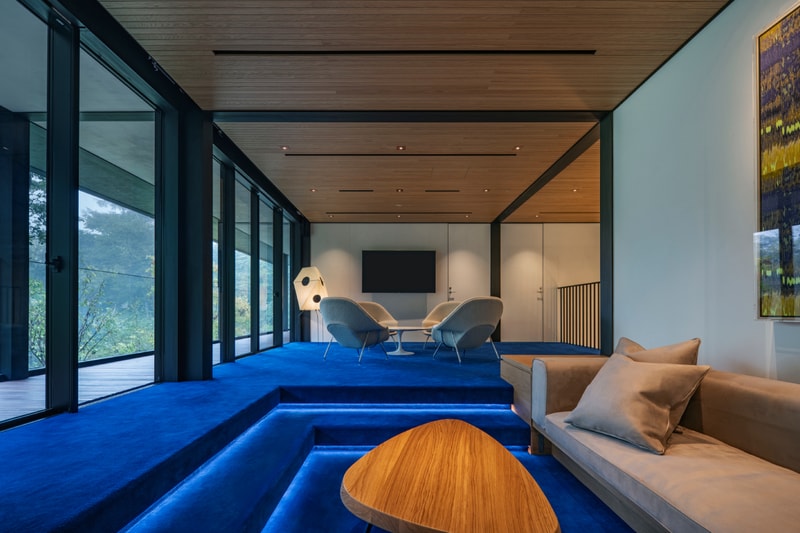
Wonderwall®︎, the renowned interior design firm led by Masamichi Katayama, has unveiled its latest project: MASU, a distinctive forest retreat situated within the NOT A HOTEL KITAKARUIZAWA development. This new villa exemplifies a sophisticated fusion of traditional Japanese architectural principles, specifically the restrained elegance of Sukiya style, with the clean lines and functional clarity characteristic of mid-century modernism. The design philosophy is deeply rooted in the concept of "Suki ni sumu," which translates to "As you like it," emphasizing a personalized and adaptable living experience.
The architectural inspiration for MASU draws significantly from Kenzo Tange’s seminal 1953 residence in Seijo, Tokyo. Tange, a towering figure in 20th-century architecture and a Pritzker Prize laureate, was known for his innovative approach to integrating traditional Japanese spatial concepts with modernist structural systems. Wonderwall®︎ reinterprets this dialogue for contemporary living, creating a dwelling that respects its natural surroundings while offering modern comfort and aesthetic appeal.
A defining feature of MASU is its innovative modular design. The upper floor is organized around a system of eight 4x4-meter "masu" units, a nod to the Japanese word for a square measure. These modules are enveloped by a robust steel structure and are further unified by a continuous 360-degree deck. This expansive deck serves to dissolve the conventional boundaries between the interior living spaces and the lush woodland of North Karuizawa, inviting the natural environment into the home.
On the lower level, the villa employs a pilotis structure, elevating key living areas. This design choice opens up the dining space to an expansive outdoor living area, complete with a fire pit, fostering a connection with nature and providing an ideal setting for al fresco entertaining. A striking, light cantilevered staircase elegantly traverses the double-height atrium, facilitating the unimpeded flow of natural light and fresh air throughout the villa’s various levels.
Internally, Wonderwall®︎ has curated MASU not as a monolithic interior, but as a dynamic conversation between Eastern and Western design sensibilities, artfully juxtaposing vintage and contemporary elements. The interiors are characterized by warm timber ceilings, expansive glass panels that maximize natural light and views, and understated architectural surfaces. These foundational elements are enriched by a selection of tactile and visually engaging furnishings. These include custom-designed pieces created specifically for MASU, alongside carefully chosen iconic mid-century modern classics. The atrium is bathed in the soft, sculptural glow of Isamu Noguchi’s Akari lighting fixtures, renowned for their organic forms and delicate illumination. The living areas are further enhanced by significant design pieces such as George Nakashima’s CN108 Bench, a masterclass in organic woodworking; Eero Saarinen’s iconic Womb Chair, designed for ultimate relaxation; and handcrafted stools by Jean Touret, adding a touch of artisanal warmth. Adding another dimension to the artistic narrative, Mika Tajima’s artwork, "Negative Entropy," is integrated into the living area. This innovative piece translates sound data into intricate jacquard-woven imagery, offering a unique sensory experience. The overall ambiance is softened by the presence of deep carpeting and low-slung seating arrangements, which impart a more relaxed, almost sunken lounge-like character, providing a comforting counterpoint to the villa’s otherwise disciplined geometric framework. The project's commitment to a personalized living experience is underscored by its foundational concept, "Suki ni sumu."
Original source — read the full reporting at the publisher:
Read on HypebeastGet the weekly AI digest
AI news + new model releases, weekly. Drafted by our agents, reviewed by humans.