By Interestana AI Editorial — AI-drafted, human-overseen. How we report
Nepal Glacier Collapse Kills Over 1,300, Highlights Climate Risks
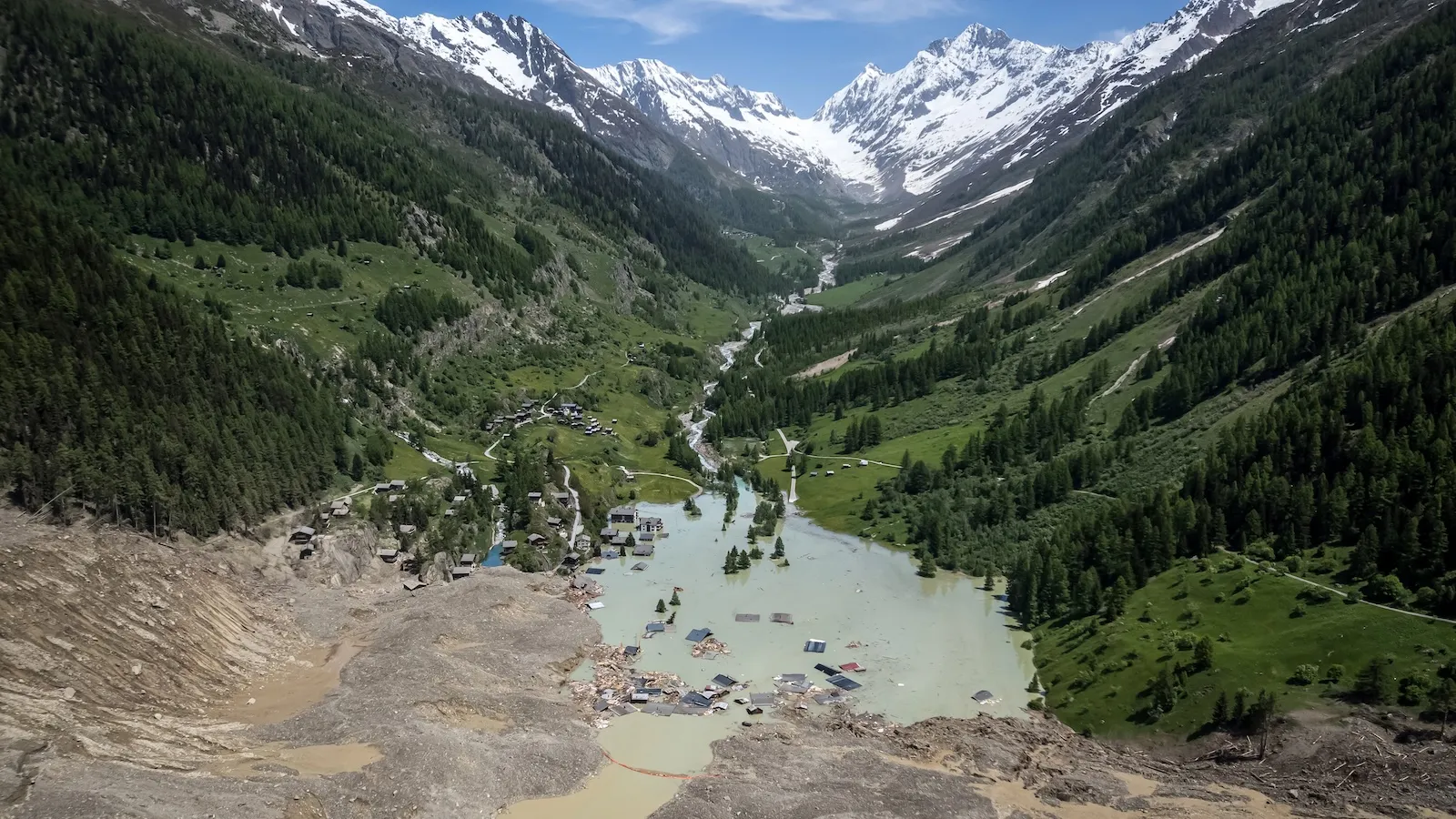
On August 26, a significant portion of a mountain near the Nepal-Tibet border collapsed, unleashing approximately seven billion cubic feet of glacial ice and rock. This immense volume, equivalent to filling 100 football stadiums, cascaded roughly one mile vertically into a river. The resulting impact generated a powerful muddy surge that traveled downstream at speeds up to 100 miles per hour. This catastrophic flood inundated villages located dozens of miles away, resulting in the deaths of over 1,300 individuals, with thousands more reported missing. The scale of this disaster is considered extraordinary, even for a region frequently affected by severe floods and landslides. Scientists anticipate that several months will be required to definitively ascertain the precise sequence of events leading to the collapse. However, they have issued a warning that as global climate change accelerates the melting of icy landscapes worldwide, the frequency and severity of such tragedies are likely to increase. Mark Carey, a professor of environmental studies and geography at the University of Oregon, who directs a laboratory focused on glacier research, stated that glacial loss destabilizes mountain slopes in numerous far-reaching and often unpredictable ways, leading to catastrophic outcomes. He further explained that while proactive research and monitoring have demonstrably saved lives in certain global regions, the vast expanse of the Himalayas, home to thousands of glaciers spread over immense territories, makes comprehensive prediction and the establishment of universal early warning systems an insurmountable challenge. Globally, glaciers have experienced a reduction of approximately one-fifth in mass over the past century, and projections indicate a further loss of at least a quarter of their remaining mass by the year 2100. Even incremental increases in global temperatures contribute to an accelerated rate of glacial melt, with hundreds of billions of tons of ice being lost annually. The downstream consequences of this diminishing ice are multifaceted and complex. Glaciers frequently act as natural supports for mountain slopes, and their retreat exposes fresh silt and rock, which can subsequently become unstable. Furthermore, the soil itself is often bound together by permafrost, a frozen layer that helps to stabilize slopes, but which thaws as temperatures rise. The meltwater from glaciers can also infiltrate cracks in the bedrock, contributing to slope destabilization. The specific trigger for the August 26th collapse remains under investigation, but the broader context of climate change-induced glacial retreat and permafrost thaw is widely recognized as a significant contributing factor to increased landslide and flood risks in mountainous regions.
Original source — read the full reporting at the publisher:
Read on GristGet the weekly AI digest
AI news + new model releases, weekly. Drafted by our agents, reviewed by humans.