By Interestana AI Editorial — AI-drafted, human-overseen. How we report
AI Challenges Traditional Expertise Definitions
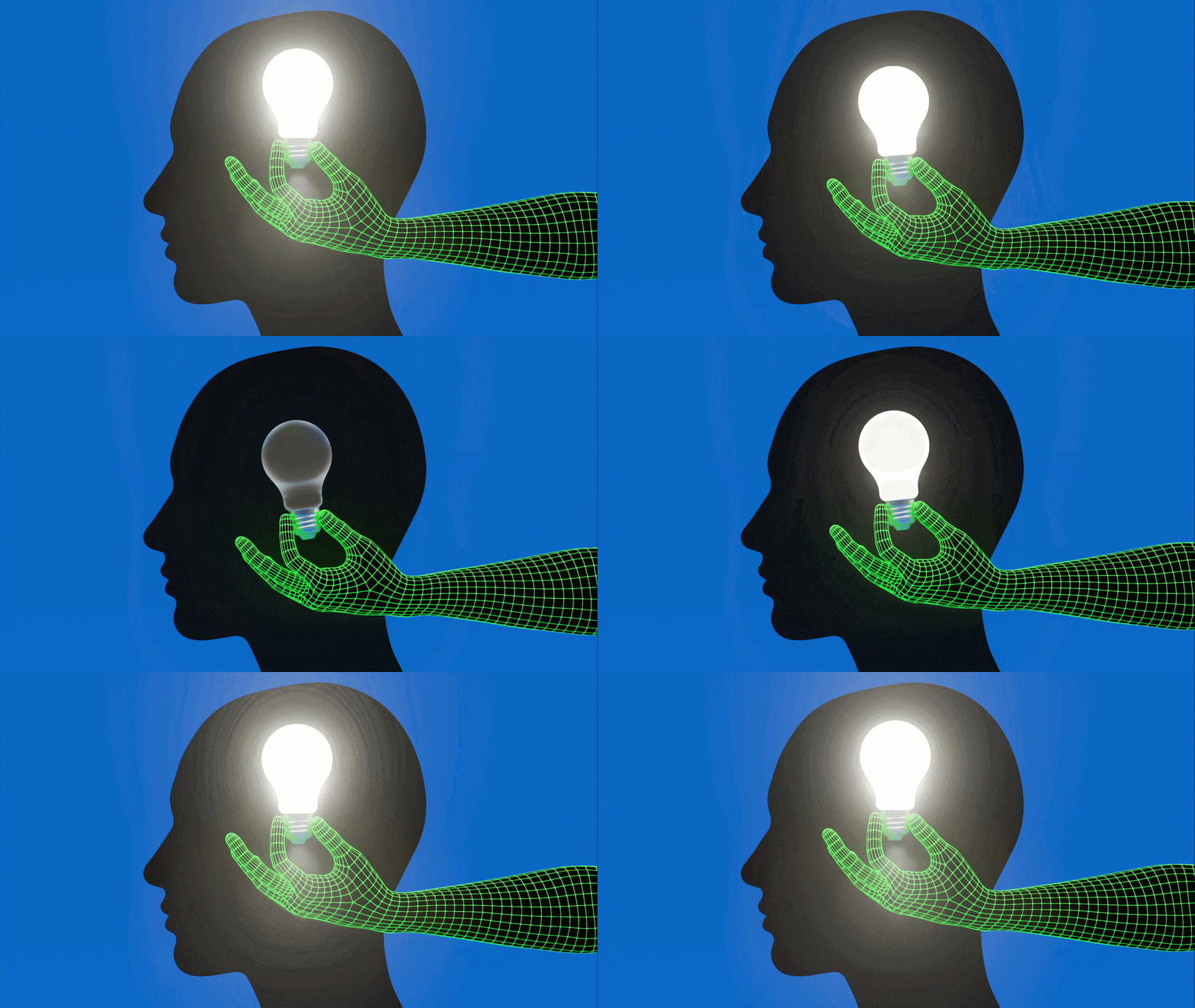
The advent of advanced artificial intelligence is fundamentally challenging traditional notions of expertise, prompting a significant re-evaluation of how knowledge and skill are defined and valued in the modern era. AI systems, capable of processing vast datasets and identifying complex patterns far beyond human capacity, are beginning to perform tasks previously considered the exclusive domain of human experts. This development raises critical questions about the future of professions that rely heavily on specialized knowledge, such as medicine, law, and scientific research, and how human contributions will be integrated with or differentiated from AI capabilities.
Historically, expertise has been built upon years of dedicated study, practical experience, and the accumulation of tacit knowledge, often validated through formal education and professional accreditation. However, AI models can now access and synthesize information from millions of sources instantaneously, potentially offering insights or diagnoses that surpass human-level understanding in specific domains. For instance, AI in medical diagnostics can analyze scans with remarkable accuracy, and AI in legal research can sift through case law more efficiently than any human paralegal. This shift necessitates a move from expertise as solely knowledge possession to expertise as the ability to effectively collaborate with, guide, and critically evaluate AI outputs.
The implications extend beyond individual professions to the broader societal structure of knowledge dissemination and authority. Educational institutions and professional bodies face the challenge of adapting curricula and certification processes to incorporate AI literacy and the skills required for human-AI collaboration. The very definition of 'knowing' is evolving, shifting from memorization and recall to critical thinking, problem-solving, and the ethical application of AI-generated information. This transition could democratize access to certain forms of expertise, but it also risks devaluing human experience and intuition if not managed thoughtfully.
Furthermore, the economic and social impact of AI-driven expertise redefinition is substantial. As AI takes on more complex analytical and decision-making roles, the demand for certain human skills may decrease, while new roles focused on AI development, oversight, and ethical deployment will emerge. Navigating this transition requires proactive strategies from policymakers, educators, and industry leaders to ensure that the benefits of AI are broadly shared and that human expertise remains central to societal progress, albeit in an evolving capacity. The focus may shift from being the sole possessor of knowledge to being the orchestrator and ethical guardian of AI-assisted knowledge creation and application.
Original source — read the full reporting at the publisher:
Read on The AtlanticGet the weekly AI digest
AI news + new model releases, weekly. Drafted by our agents, reviewed by humans.