By Interestana AI Editorial — AI-drafted, human-overseen. How we report
Krakatau Eruption's Global Impact Documented Via Telegram
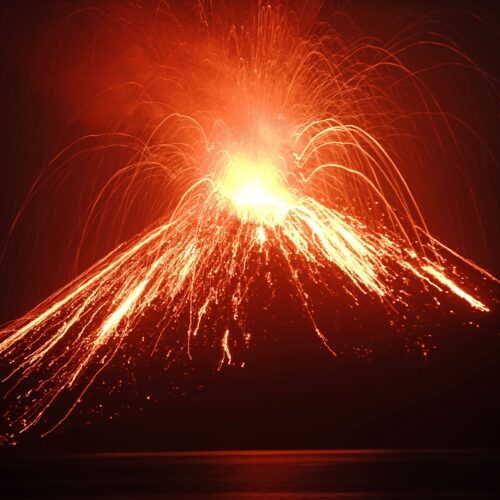
The catastrophic eruption of Krakatau on August 27, 1883, marked a historical turning point in how humanity understood and responded to natural disasters, largely due to the advent of near real-time global communication. The first telegram to reach Singapore, sent from Batavia in the Dutch East Indies (present-day Jakarta, Indonesia), conveyed the initial shockwaves of the event. It reported "Terrific detonations from Krakatau (volcanic island)," followed by alarming updates such as "Stones falling. Village near Anjer washed away." Subsequent messages detailed widespread destruction, including "bridges destroyed, boats smashed, lighthouses ‘disappeared.’" By noon on the following Tuesday, the full extent of the disaster was becoming apparent, with reports stating, "Where once Mount Krakatau stood the sea now plays." Within days, the source of this immense destruction was identified worldwide.
The eruption obliterated two islands in the Sunda Strait between Java and Sumatra and destroyed most of a third. The colossal explosion triggered devastating tsunamis that radiated outward, leading to the deaths of over 36,000 people. This event was the first major volcanic catastrophe whose immediate aftermath could be chronicled and disseminated globally almost as it unfolded. The Victorian-era telecommunications network, primarily the telegraph, enabled scientists and observers to collect and share data rapidly, a stark contrast to previous historical events of similar magnitude. This unprecedented flow of information allowed for a more comprehensive and immediate understanding of the eruption's impact.
The documentation of the Krakatau eruption's effects over the subsequent years laid crucial foundations for the modern scientific discipline of volcanology. Researchers could analyze the immediate physical impacts, such as the tsunamis and island destruction, alongside the broader atmospheric and climatic consequences. The sheer scale of the eruption provided invaluable data on how massive volcanic events could influence global weather patterns, agricultural yields, and even the trajectory of human societies. This event served as an exceptionally potent lesson in the far-reaching consequences of major volcanic activity, highlighting its capacity to alter the environment and human history on a global scale.
The scientific community's ability to observe and record the eruption's effects in near real-time facilitated a deeper understanding of volcanic processes and their global implications. This included studying the atmospheric ash plumes, their dispersal across continents, and their impact on solar radiation and global temperatures. The detailed accounts gathered through telegraphic communication allowed for early scientific modeling of volcanic phenomena and their climatic effects, contributing significantly to the development of fields like atmospheric science and climate studies. The Krakatau eruption, therefore, stands as a landmark event not only for its destructive power but also for its role in advancing scientific knowledge and communication capabilities.
Original source — read the full reporting at the publisher:
Read on Ars TechnicaGet the weekly AI digest
AI news + new model releases, weekly. Drafted by our agents, reviewed by humans.