By Interestana AI Editorial — AI-drafted, human-overseen. How we report
Homeland Security Chief Mullin: ICE Agents May Deploy to Polls
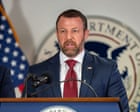
Homeland Security Secretary Markwayne Mullin announced on Tuesday that federal Immigration and Customs Enforcement (ICE) officers could be deployed to polling sites across the United States. Mullin clarified that the presence of ICE agents would not be for general patrolling of polling locations but rather to address specific threats or to execute warrants. This statement was made in response to questions from reporters in New York. The potential deployment of federal law enforcement to polling places raises significant questions regarding election integrity and voter access. ICE is a federal law enforcement agency under the Department of Homeland Security responsible for enforcing immigration and customs laws within the United States. Its primary mission includes identifying and apprehending individuals who have violated U.S. immigration laws, as well as combating smuggling and fraud. The agency's operational scope typically involves border security, interior enforcement, and international cooperation. The assertion that ICE agents might be present at polling stations, even under specific circumstances, could be interpreted by some as an attempt to intimidate voters or interfere with the electoral process. Historically, federal law enforcement presence at polling sites has been a sensitive issue, often linked to concerns about voter suppression and the militarization of elections. The Department of Homeland Security (DHS), the parent agency of ICE, is tasked with protecting the nation from a wide range of threats, including terrorism, border security, and natural disasters. The Secretary of Homeland Security is the principal advisor to the President on all matters relating to homeland security. Mullin's remarks suggest a proactive stance by the department in addressing potential disruptions during election periods. The specific criteria for deployment, such as "specific threats" and "serving a warrant," indicate that such actions would be targeted and based on intelligence or legal mandates rather than broad security measures. However, the vagueness of "specific threats" could leave room for interpretation and potential controversy. The implications of this policy could extend to the perception of election security and public trust in the democratic process. The announcement comes at a time when election security remains a paramount concern for many Americans, with ongoing debates about foreign interference, voter fraud, and the integrity of voting systems. The involvement of an agency like ICE, whose primary focus is immigration enforcement, in election-related security measures is an unusual development that is likely to draw considerable attention and scrutiny from civil liberties advocates, election officials, and the public at large. Further details regarding the protocols and guidelines for such deployments are expected to be clarified as the election period approaches.
Original source — read the full reporting at the publisher:
Read on The Guardian WorldGet the weekly AI digest
AI news + new model releases, weekly. Drafted by our agents, reviewed by humans.