By Interestana AI Editorial — AI-drafted, human-overseen. How we report
Samsung, TSMC Adopt ASML's $400M Chip Machines, Boost Production
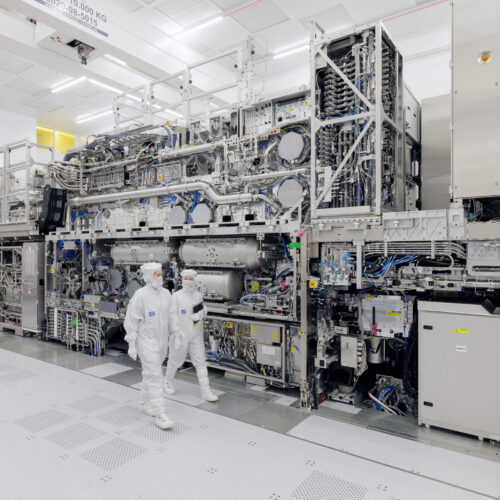
Samsung Electronics and Taiwan Semiconductor Manufacturing Co. (TSMC) have announced their intention to adopt ASML's latest chipmaking machines within the next several years. These leading semiconductor manufacturers have also agreed to a significant technology change, joining Intel in a move that is projected to enhance chip production by up to 40 percent on these new machines. This collective adoption signals the semiconductor industry's widespread embrace of High Numerical Aperture Extreme Ultraviolet (High NA EUV) lithography technology. ASML, a Dutch technology company, is the sole provider of these advanced machines, which come with a substantial price tag of up to $400 million per unit, according to Bloomberg.
The High NA EUV technology is poised to enable chip designers to incorporate even smaller features into next-generation chips. These advancements are critical for developing more powerful and energy-efficient processors, which are increasingly in demand for AI data centers and a wide array of consumer electronics, including smartphones, tablets, and laptops. ASML's EUV lithography machines are fundamental to modern chip manufacturing. They utilize powerful laser light to precisely imprint intricate patterns onto silicon wafers, layer by layer, gradually constructing the complex circuitry that defines silicon chips. The continuous evolution of EUV technology involves the pursuit of more potent light sources with progressively shorter wavelengths, essential for etching ever-smaller features onto silicon wafers.
This commitment from Samsung and TSMC to ASML's High NA EUV technology underscores the strategic importance of advanced lithography in maintaining a competitive edge in the global semiconductor market. The ability to produce smaller, more intricate chip designs directly impacts the performance and efficiency of the devices that rely on them. The increased production capacity of up to 40 percent, facilitated by the agreed-upon technology change, is expected to help meet the escalating demand for advanced semiconductors, particularly those powering artificial intelligence applications and next-generation consumer devices. The investment in these costly machines and the collaborative adoption of new manufacturing processes highlight the industry's forward-looking approach to innovation and its dedication to pushing the boundaries of silicon technology.
Original source — read the full reporting at the publisher:
Read on Ars TechnicaGet the weekly AI digest
AI news + new model releases, weekly. Drafted by our agents, reviewed by humans.