By Interestana AI Editorial — AI-drafted, human-overseen. How we report
Ferrari F40 Becomes Fashion and Motorsport Status Symbol
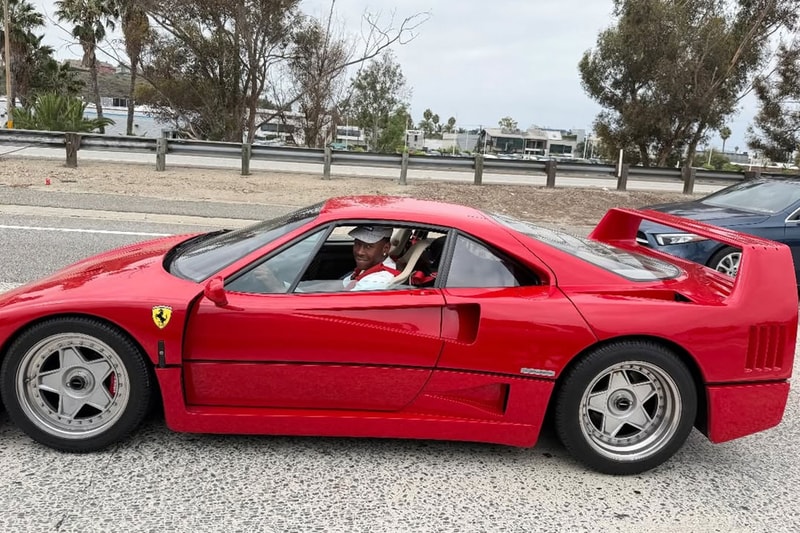
The Ferrari F40 is experiencing a significant modern resurgence, transcending its automotive origins to become a prominent cultural phenomenon and a coveted status symbol for collectors and enthusiasts. This renewed interest is evidenced by its recent appearances in popular culture, including Tyler, the Creator featuring his F40 in his 2025 "STOP PLAYING WITH ME" music video. Further amplifying its visibility, a viral video captured Pharrell Williams driving by Tyler, the Creator, who was cruising in the iconic supercar through Los Angeles. Adding to the F40's current prominence, Formula 1 champion Lewis Hamilton recently announced on social media that he has acquired one of his own. The F40's allure has historically captivated a diverse range of high-profile figures, extending beyond contemporary celebrities to include figures like Sir Rod Stewart, who famously requested his F40 in yellow, deviating from the standard factory red. Toto Wolff, the CEO of the Mercedes F1 Team, is another notable owner. The enduring appeal of the F40 stems from its raw, uncompromising legacy. Originally built to commemorate Ferrari's 40th anniversary, it holds the profound distinction of being the final masterpiece personally approved by the company's founder, Enzo Ferrari, prior to his passing in 1988. It represents the ultimate expression of a speed machine, deliberately stripped of modern luxuries and electronic safety nets. In contrast to contemporary million-dollar hypercars that feature hybrid-electric motors, rapid dual-clutch automatic transmissions, and sophisticated traction control systems designed to assist the driver, the F40 offers a visceral, analog driving experience. This is particularly relevant in an increasingly digital world. Understanding the F40 requires appreciating its extreme commitment to weight reduction and direct driver feedback. The vehicle lacks power steering and power brakes, and crucially, it has no Anti-lock Braking System (ABS) to prevent wheel lock-up during hard braking. Furthermore, the interior is devoid of plush carpets and a stereo system, emphasizing its no-frills, performance-oriented design. The F40's construction utilized advanced materials for its era, including a carbon fiber and Kevlar composite chassis and a lightweight tubular steel frame, contributing to its exceptional power-to-weight ratio. Its twin-turbocharged 2.9-liter V8 engine produced approximately 471 horsepower, enabling it to achieve a top speed of over 200 miles per hour, a remarkable feat for its time. The car's distinctive Pininfarina-designed bodywork, characterized by its aggressive aerodynamics and iconic NACA ducts, further cemented its legendary status. The F40's production run, from 1987 to 1992, saw approximately 1,315 units manufactured, making it a relatively rare collector's item.
Original source — read the full reporting at the publisher:
Read on HypebeastGet the weekly AI digest
AI news + new model releases, weekly. Drafted by our agents, reviewed by humans.