By Interestana AI Editorial — AI-drafted, human-overseen. How we report
BMW iX3 Outperforms Mercedes, Volvo in Highway Efficiency Test
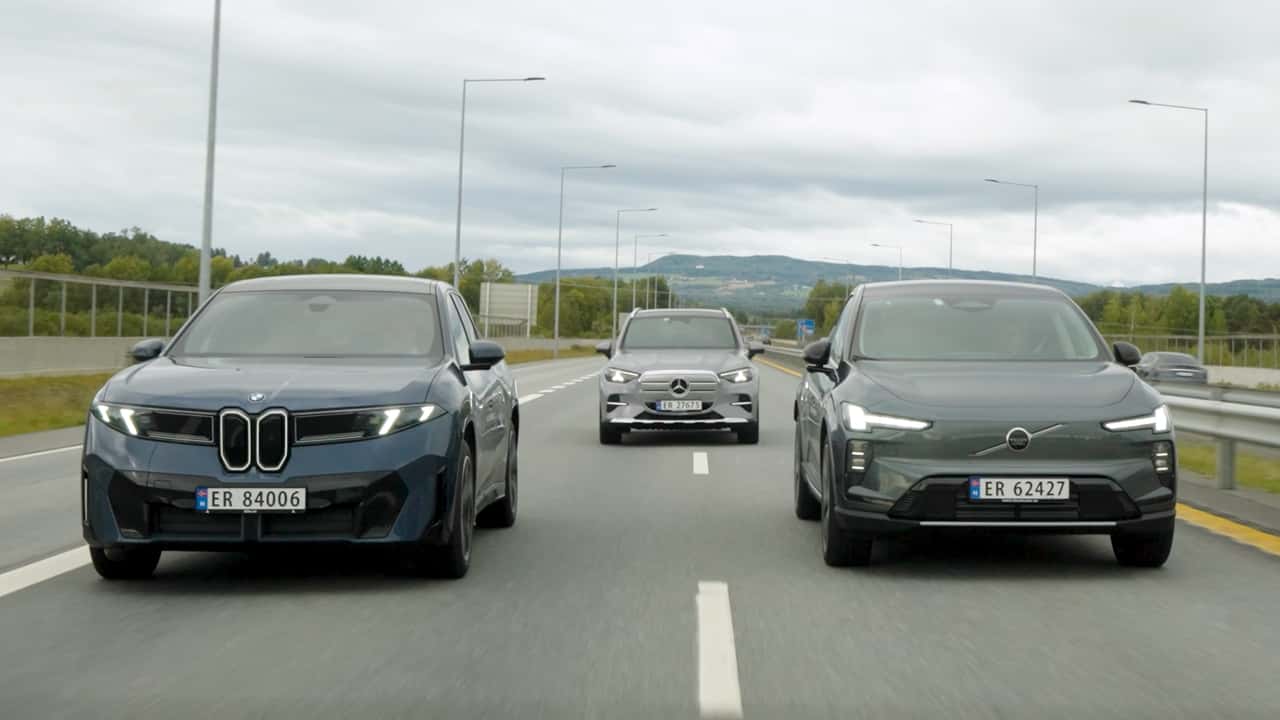
The BMW iX3 demonstrated superior highway efficiency and range compared to the Mercedes-Benz GLC and Volvo EX60 in a recent test conducted by Auto Express. The electric SUV consumed less energy than its German and Swedish rivals over a standardized 150-mile highway route, a critical metric for electric vehicle practicality. This improved efficiency, combined with a larger battery capacity, allowed the iX3 to achieve a greater overall range on the test loop.
During the test, the BMW iX3 recorded an average energy consumption of 3.6 miles per kilowatt-hour (mi/kWh). This figure translates to a real-world highway range of approximately 240 miles from its 80 kWh battery. In contrast, the Mercedes-Benz GLC 300 e, also tested with its battery fully charged, achieved 3.0 mi/kWh, yielding a range of about 180 miles. The Volvo EX60, which features a smaller 78 kWh battery, managed 3.1 mi/kWh, resulting in a comparable range of approximately 186 miles. The test route was designed to simulate typical highway driving conditions, including sustained speeds and varied gradients, to provide a realistic comparison of the vehicles' performance.
The iX3's advantage in efficiency is attributed to a combination of factors, including its aerodynamic design, efficient powertrain, and the specific tuning of its energy management systems. While the Mercedes-Benz GLC 300 e is a plug-in hybrid and the Volvo EX60 is a fully electric SUV, the comparison focused on their electric-only driving capabilities and energy usage under highway conditions. The iX3's ability to blend lower energy consumption with a larger battery capacity proved to be the decisive factor in its victory in this efficiency contest. This outcome highlights the importance of powertrain efficiency in extending the practical range of electric vehicles, especially for long-distance highway travel.
Auto Express noted that the iX3's performance is particularly impressive given its positioning as a more traditional SUV compared to some of the more aerodynamically optimized electric vehicles on the market. The test results suggest that BMW's engineering approach to the iX3 has successfully optimized its energy usage for highway driving, a common scenario for many car owners. The publication's findings provide valuable insights for consumers considering an electric SUV, emphasizing that not all EVs are created equal when it comes to real-world efficiency on the open road. The iX3's ability to cover more distance on a single charge under these demanding conditions makes it a compelling option for those prioritizing range and cost-effectiveness in their electric vehicle choice.
Original source — read the full reporting at the publisher:
Read on InsideEVsGet the weekly AI digest
AI news + new model releases, weekly. Drafted by our agents, reviewed by humans.