By Interestana AI Editorial — AI-drafted, human-overseen. How we report
US Housing Inventory Sees Modest Growth Ahead of Fall
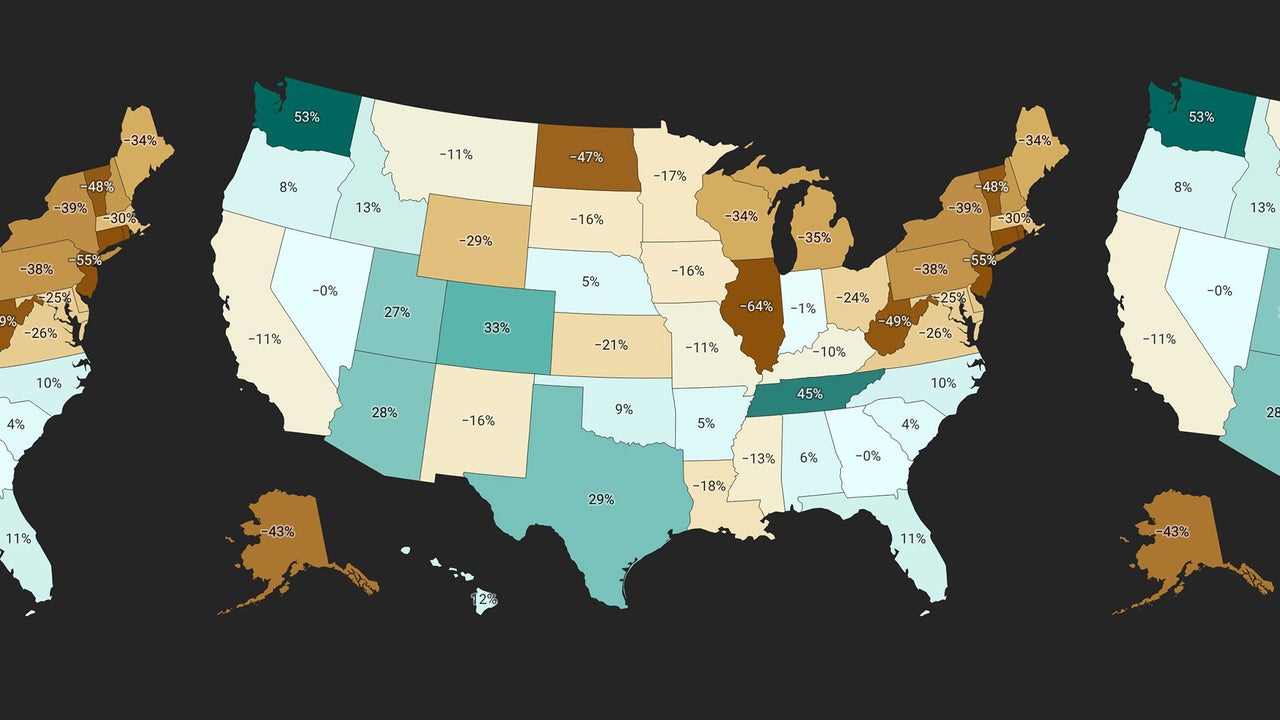
Nationally aggregated housing inventory experienced a 2.1% year-over-year increase from July 31, 2025, to July 31, 2026, indicating a modest expansion in available homes. This growth rate is a slight acceleration from the previous month's 1.9% pace but represents a significant deceleration compared to the 24.7% year-over-year inventory growth observed a year prior. Following a period where buyer leverage increased due to softening market conditions, the national housing market's supply-demand balance has stabilized over the past year, settling into what ResiClub characterizes as a "soft" market. However, this national aggregate masks considerable regional and local variations.
Despite the recent inventory increases, the total number of active listings remains below pre-pandemic levels. As of July 2026, the national inventory was 9.1% below the July 2019 figure. Specific resale markets, particularly in parts of the Midwest and Northeast, continue to experience relatively tight inventory conditions. Realtor.com data illustrates historical inventory fluctuations: July 2017 saw 1,322,659 active listings, which decreased to 1,239,534 by July 2019. The onset of the pandemic housing boom led to a sharp decline, with only 546,686 listings in July 2021. Inventory began to recover, reaching 691,652 in July 2022 and 647,135 in July 2023. The most recent data shows a substantial rebound, with 884,273 listings in July 2024, followed by 1,102,787 in July 2025, and 1,126,252 in July 2026.
The pace of inventory growth has also shifted. Between July 2024 and July 2025, the U.S. saw an increase of 218,514 active listings. However, the subsequent year, from July 2025 to July 2026, the increase was considerably smaller, with only 23,465 additional homes for sale nationwide. ResiClub provides more granular data for its paid members, offering in-depth analysis of inventory shifts across over 800 metropolitan areas, 3,000 counties, and 25,000 zip codes. This detailed analysis allows for a deeper understanding of the localized dynamics within the broader housing market.
The current national inventory level, while showing growth, remains a key indicator of market health. The shift from rapid inventory expansion to a more moderate increase suggests a market that is finding a new equilibrium. The sustained lower inventory in certain regions, contrasted with the national trend, highlights the importance of localized real estate analysis. As the fall season approaches, the interplay between supply, demand, and regional economic factors will continue to shape the housing market's trajectory.
Original source — read the full reporting at the publisher:
Read on Fast CompanyGet the weekly AI digest
AI news + new model releases, weekly. Drafted by our agents, reviewed by humans.