By Interestana AI Editorial — AI-drafted, human-overseen. How we report
S&P 500 Adds Crypto's $2 Trillion Market Cap This Month
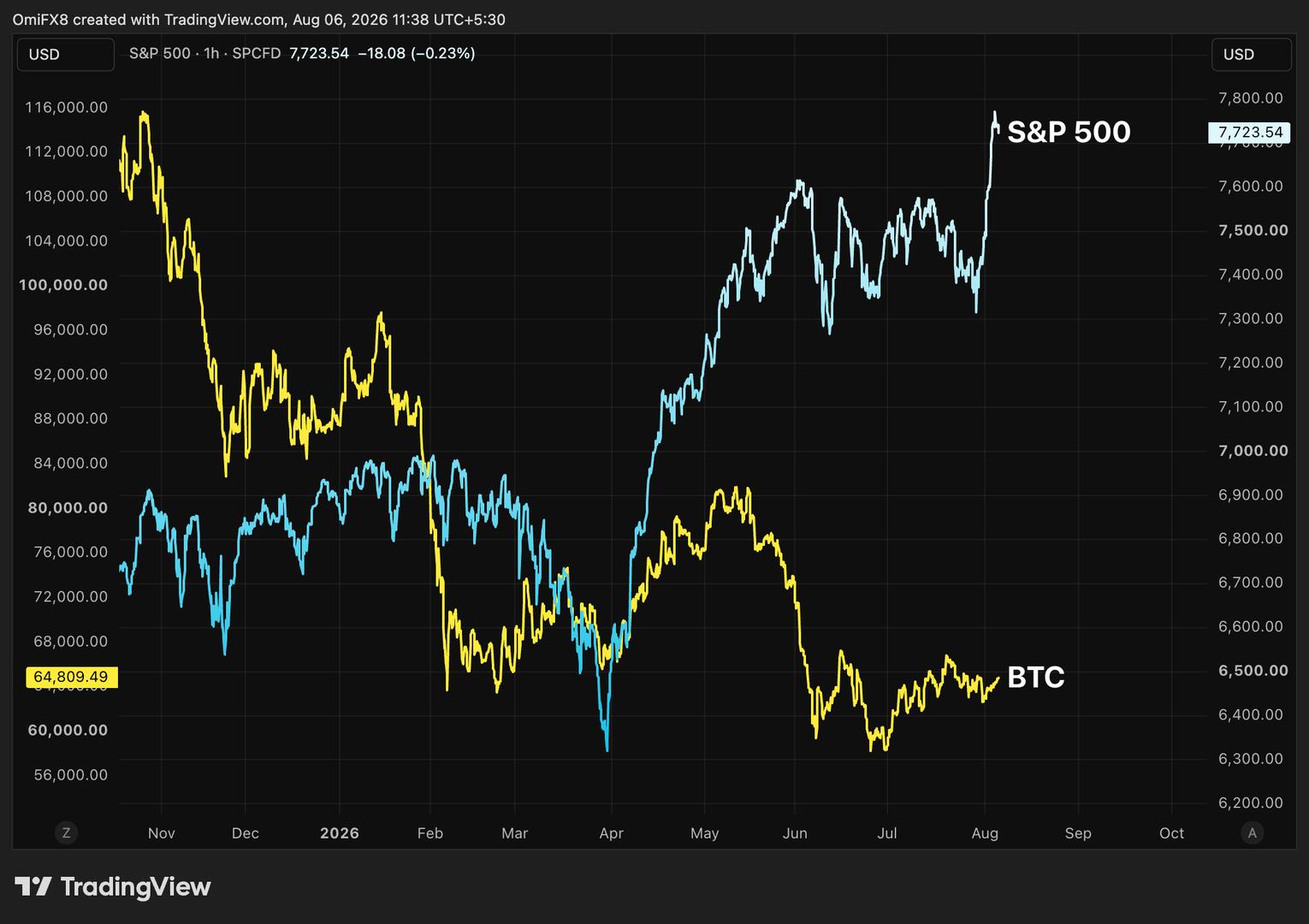
The S&P 500 index has experienced a significant valuation increase this month, adding approximately $2 trillion to its market capitalization. This surge in value is notable as it closely mirrors the total market capitalization of the entire cryptocurrency sector, which stands at roughly $2 trillion. Despite this substantial growth in traditional equity markets, the price of Bitcoin, the leading cryptocurrency, has shown minimal movement, failing to register a significant uptick. This divergence in performance raises questions about the interconnectedness and independent drivers of these two distinct asset classes.
The reasons behind Bitcoin's muted reaction to the S&P 500's substantial gain are multifaceted and extend beyond simple market correlation. One key factor is the differing investor bases and underlying economic forces that influence each market. The S&P 500's growth is often driven by corporate earnings, macroeconomic indicators, and investor sentiment towards established industries. In contrast, the cryptocurrency market is heavily influenced by technological adoption, regulatory developments, speculative trading, and a distinct set of macroeconomic factors that may not directly align with those affecting traditional equities.
Furthermore, the nature of capital flows into each market plays a crucial role. While institutional investors are increasingly allocating capital to both equities and, to a lesser extent, cryptocurrencies, the decision-making processes and risk appetites can differ significantly. The $2 trillion added to the S&P 500 likely represents a broad influx of capital driven by a variety of factors, including economic recovery, inflation hedging strategies, and a general appetite for risk in traditional assets. Bitcoin's lack of a corresponding price surge suggests that either capital has not flowed into it at the same pace or that other, more dominant forces are at play within the crypto market.
Analysts point to several potential reasons for Bitcoin's relative indifference. These include ongoing regulatory uncertainties surrounding digital assets, the recent impact of macroeconomic events such as interest rate hikes by central banks which can reduce appetite for speculative assets, and the inherent volatility of the cryptocurrency market. While the S&P 500's $2 trillion gain represents a significant addition to its overall value, the cryptocurrency market's $2 trillion valuation is itself subject to rapid fluctuations. Therefore, a static comparison of market caps may not fully capture the dynamic interplay between these markets. The performance of Bitcoin is often dictated by its own ecosystem's developments, such as halving events, new technological integrations, and shifts in investor sentiment specific to digital currencies, rather than solely by the performance of traditional stock indices.
Original source — read the full reporting at the publisher:
Read on CoinDeskGet the weekly AI digest
AI news + new model releases, weekly. Drafted by our agents, reviewed by humans.