By Interestana AI Editorial — AI-drafted, human-overseen. How we report
1841 Space Weather Event Likely Typo, Study Finds
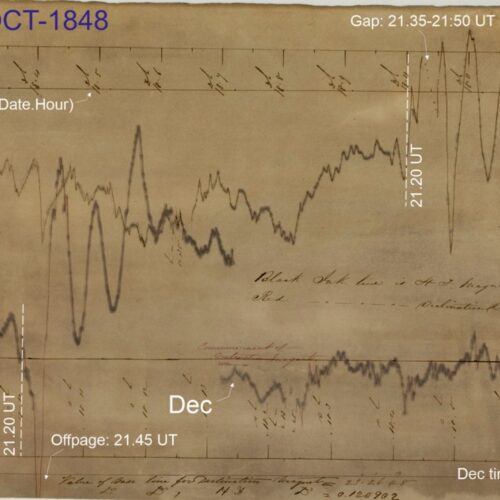
A recent study published in the journal Space Weather has re-examined historical accounts of early technological disruptions attributed to space weather, specifically focusing on an event reported in Exeter, England, in October 1841. Scholars in 2013 had identified an anonymous report from 1871 in Nature detailing a "very intense magnetic disturbance" that allegedly disrupted rail travel in Exeter. If accurate, this 1841 event would have represented the earliest known instance of significant space weather impacting human technology, predating the more famous Carrington Event of 1859. However, the new research, co-authored by Jim Wild of Lancaster University, posits that the 1841 date is most likely a typographical error. The study suggests that the actual railway disruption caused by geomagnetic activity likely occurred several years after 1841, pushing back the earliest documented technological impact of space weather. This finding is significant because it highlights the long-standing interaction between emerging electrical technologies and the space environment. Jim Wild emphasized that while space weather is often viewed as a contemporary challenge due to modern reliance on satellites, communications, and electricity grids, this study demonstrates that societies have been experiencing its effects for nearly as long as electrical technologies have existed. The Exeter train delay, if it occurred later, would still be a compelling case study situated at the critical juncture where nascent technologies first encountered the realities of the space environment. The Carrington Event of 1859 remains the most powerful geomagnetic storm recorded in scientific history. It caused widespread auroral displays across the globe, leading to sparking and fires in telegraph stations. The telegraph, a technology that emerged in the 1830s, was particularly vulnerable. The geomagnetically induced currents, likely stemming from a coronal mass ejection from the Sun, overwhelmed telegraph systems. Intriguingly, some telegraph operators reported being able to send and receive messages even after disconnecting their power sources, relying solely on the powerful auroral currents. This historical context underscores the sensitivity of early electrical infrastructure to solar activity and the ongoing relevance of understanding space weather's potential impacts.
Original source — read the full reporting at the publisher:
Read on Ars TechnicaGet the weekly AI digest
AI news + new model releases, weekly. Drafted by our agents, reviewed by humans.