By Interestana AI Editorial — AI-drafted, human-overseen. How we report
Thomas More Painting Undergoes Public Scientific Scrutiny
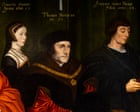
A significant 16th-century painting, believed to be the only faithful copy of Hans Holbein the Younger's lost masterpiece depicting Sir Thomas More and his descendants, is undergoing a rare public heritage science project. This initiative commenced on Thursday at Nostell in West Yorkshire, offering the public an unprecedented opportunity to witness cutting-edge scientific research in action. The project aims to uncover the painting's secrets through advanced analytical techniques, mirroring the methodology employed during the highly publicized restoration of Rembrandt's "The Night Watch" at the Rijksmuseum in Amsterdam. This marks a UK first in heritage science, allowing direct public observation of the examination process.
The painting in question is considered of international importance and provides a unique visual record of Thomas More, the English lawyer, social philosopher, author, statesman, and noted Renaissance humanist, and his family. Holbein the Younger, a German and Swiss painter and printmaker who worked in England, was renowned for his portraits of the Tudor court. The original "Thomas More" portrait by Holbein is lost, making this copy exceptionally valuable for art historians and conservators seeking to understand the original composition and Holbein's techniques. The public access component of the project is designed to demystify the scientific processes involved in art conservation and analysis, fostering greater public engagement with cultural heritage.
Techniques deployed during the project are expected to include non-invasive imaging methods such as infrared reflectography and X-ray fluorescence. Infrared reflectography can reveal underdrawings and changes made by the artist during the painting process, offering insights into Holbein's initial conception and any modifications. X-ray fluorescence, on the other hand, can identify the elemental composition of the pigments used, helping to date the materials and potentially identify their origin. This detailed analysis will contribute to a deeper understanding of the painting's condition, its materials, and its historical context. The findings from this project will be crucial for informing future conservation efforts and for scholarly research into Holbein's work and the Tudor period.
The decision to conduct this research with public visibility is a deliberate strategy to enhance transparency and educational outreach within the field of heritage science. By allowing visitors to observe the examination of the "Thomas More" painting, organizers hope to inspire interest in art history, conservation science, and the preservation of cultural artifacts. The project at Nostell is a testament to the evolving methods in art conservation, moving beyond traditional restoration to incorporate sophisticated scientific analysis that can unlock layers of information previously inaccessible. The insights gained are anticipated to significantly contribute to the body of knowledge surrounding this important artwork and the broader practice of heritage science in the United Kingdom and internationally.
Original source — read the full reporting at the publisher:
Read on The Guardian CultureGet the weekly AI digest
AI news + new model releases, weekly. Drafted by our agents, reviewed by humans.