By Interestana AI Editorial — AI-drafted, human-overseen. How we report
Solar Eclipse Visible Across Western Europe
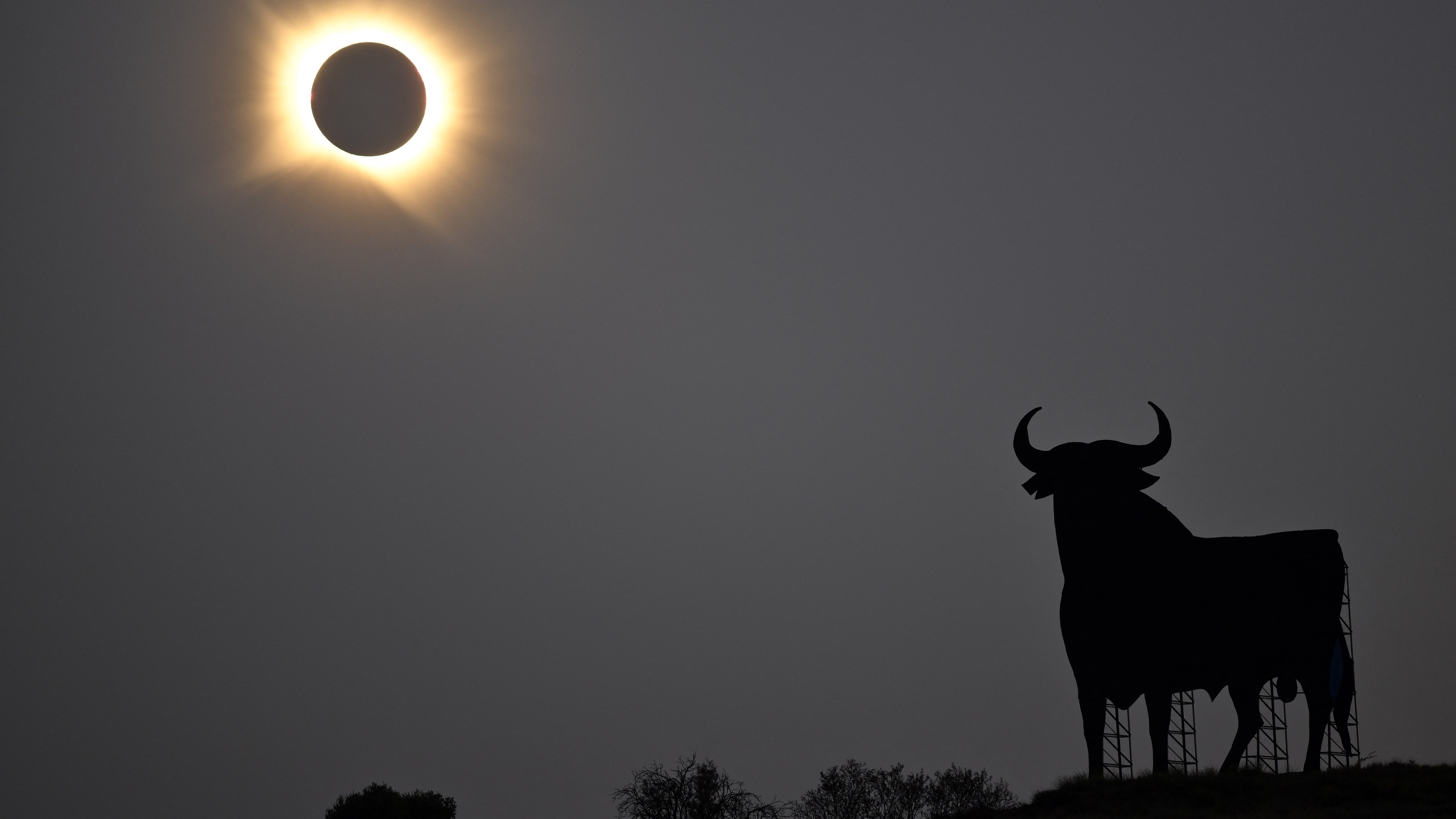
Millions of people across western Europe turned their gaze skyward on April 8, 2024, to witness a total solar eclipse. The celestial event saw the moon's shadow sweep across the region, causing a temporary but dramatic shift from daylight to darkness in affected areas. This phenomenon, where the moon passes directly between the sun and Earth, obscuring the sun's light, is a rare and awe-inspiring spectacle for those situated within the path of totality. The path of the eclipse began in the Atlantic Ocean and made landfall in western Europe, continuing its eastward trajectory. Observers in countries such as Spain, Portugal, and parts of France were ideally positioned to experience the full effect of the moon completely covering the solar disk. The duration of totality, the period when the sun is entirely hidden, varied depending on the observer's precise location within the path. During totality, the sun's corona, its outer atmosphere, becomes visible as a faint halo around the dark silhouette of the moon, a sight typically obscured by the sun's brightness. Many gathered in open spaces, equipped with specialized solar viewing glasses to safely observe the partial phases of the eclipse. The event also presented opportunities for scientific observation, with astronomers studying the sun's corona and its influence on Earth's atmosphere. The eclipse served as a reminder of the dynamic nature of our solar system and the predictable yet remarkable celestial mechanics that govern it. Following its passage over Europe, the eclipse continued its journey across other parts of the world, offering a similar spectacle to populations in different continents. The successful observation of the eclipse across western Europe was facilitated by clear weather conditions in many of the viewing locations, allowing for unobstructed views of this significant astronomical event. The next total solar eclipse visible in Europe is not expected until August 12, 2026, making this 2024 event a particularly noteworthy occurrence for the continent. The anticipation leading up to the eclipse saw significant public interest, with many communities organizing viewing events and educational programs to engage the public with astronomy and the science behind eclipses. The visual impact of the moon perfectly aligning to block the sun's brilliant disk, even for a few minutes, creates a profound experience for those who witness it firsthand. The transition from bright daylight to an eerie twilight, accompanied by a drop in temperature and the emergence of stars, is a sensory experience that has captivated humans for millennia. The scientific community also utilized this opportunity to deploy instruments and conduct research that can only be performed during the unique conditions of a total solar eclipse, contributing to our understanding of solar physics and space weather.
Original source — read the full reporting at the publisher:
Read on The AtlanticGet the weekly AI digest
AI news + new model releases, weekly. Drafted by our agents, reviewed by humans.