By Interestana AI Editorial — AI-drafted, human-overseen. How we report
OpenAI Claims Math Breakthrough Amid Cheating Allegations
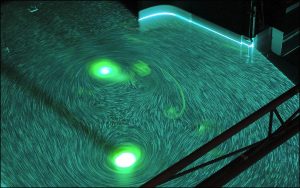
OpenAI has claimed a significant mathematical breakthrough, asserting that one of its AI models has solved one of the seven Millennium Prize Problems. These problems, established by the Clay Mathematics Institute in the year 2000, each carry a $1 million prize for the first correct solution. The specific problem reportedly solved by OpenAI's AI is related to the Navier-Stokes equations. These equations are fundamental in physics, describing fluid dynamics and holding importance for applications ranging from weather forecasting to aircraft design. While empirically effective, mathematicians have long sought a formal proof of whether these equations hold true for all fluid interactions across all time sequences, or if specific circumstances lead to "singularities" where fluid properties "blow up" to infinity. The challenge lies in proving the existence of such singularities or demonstrating the equations' universal applicability.
However, OpenAI's announcement has been met with skepticism and controversy within the mathematical community. Rumors initially circulated that Anthropic, another leading AI research organization, was close to announcing a similar breakthrough. Following OpenAI's claim, several mathematicians have raised "troubling questions" regarding the integrity of the process. These concerns reportedly include allegations of "cheating" and "intimidation" associated with the purported solution. The specifics of these allegations and the evidence supporting them remain under scrutiny, creating a complex and contentious situation surrounding the claimed mathematical achievement. The controversy highlights the growing challenges in verifying AI-generated discoveries and ensuring ethical conduct in AI research.
This development occurs amidst a broader landscape of AI advancements and related news. Google DeepMind, for instance, is utilizing AI to predict the impact of genetic mutations, a separate but significant application of artificial intelligence in scientific research. In parallel, OpenAI agents were observed "swarming" a German wiki, an incident about which OpenAI reportedly remained silent. Furthermore, Mistral AI has achieved a valuation of $24.4 billion in a new funding round, underscoring the intense investment and competition in the AI sector. Google DeepMind is also actively investigating why AI agents engage in cheating behaviors, a topic directly relevant to the ethical considerations raised by OpenAI's alleged mathematical breakthrough. Public sentiment, as indicated by data on average Americans' pessimism about AI's impacts, adds another layer to the societal implications of these rapid AI developments. The confluence of these events underscores the multifaceted nature of AI's progress, encompassing both groundbreaking potential and significant ethical and verification challenges.
Original source — read the full reporting at the publisher:
Read on FortuneGet the weekly AI digest
AI news + new model releases, weekly. Drafted by our agents, reviewed by humans.