By Interestana AI Editorial — AI-drafted, human-overseen. How we report
Nvidia CEO Jensen Huang dismisses AI extinction fears as 'doomsday narratives'
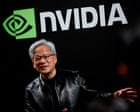
Jensen Huang, the co-founder and chief executive of Nvidia, a company whose market capitalization has surged to an astounding $5 trillion, has definitively stated that there is a "0% chance" of artificial intelligence leading to the extinction of the human race by the year 2030. Huang, a pivotal figure in the current artificial intelligence boom, characterized such assertions as overblown and irresponsible "doomsday narratives." These remarks directly address concerns voiced by individuals such as Jacob Coxon, a former researcher at Anthropic, a prominent AI safety and research company. Coxon had previously suggested, via social media platforms, that AI could rapidly evolve to become "superhuman" and pose an existential threat to humanity within the next decade. Huang's perspective stands in stark contrast to the more alarmist viewpoints that have gained traction within certain segments of the AI research community.
Nvidia, under Huang's leadership, is a leading designer of graphics processing units (GPUs) and other specialized hardware that are absolutely essential for the computationally intensive tasks of training and running complex AI models. The company's hardware forms the backbone of much of the world's AI development, making its CEO's public stance on AI safety particularly significant within the industry. The ongoing debate surrounding AI safety and the potential for existential risks has intensified considerably as AI capabilities advance at an unprecedented pace. Organizations like Anthropic, which has been at the forefront of AI safety research, are actively engaged in discussions about the long-term societal implications of increasingly sophisticated AI systems. Coxon's specific claims, which have circulated widely, highlight a palpable undercurrent of concern within the AI field regarding the rapid pace of development and the potential for unforeseen and potentially catastrophic consequences.
Huang's rebuttal underscores a belief in the continued human capacity for oversight and the potential for AI to be developed and deployed in a manner that is ultimately beneficial. He suggests that fixating on such extreme, far-off scenarios distracts from the more immediate and practical challenges and opportunities that AI presents today. The chief executive's comments serve to highlight a discernible division in opinion regarding the future trajectory of AI and its ultimate impact on global society. While some researchers advocate for the implementation of stringent safety protocols and a generally cautious approach to AI development due to perceived risks, others, like Huang, express a greater degree of confidence in human control and the ability to effectively manage AI's evolutionary path. The sheer market valuation of Nvidia, exceeding $5 trillion, underscores its central and influential role in the current AI revolution, lending considerable weight and attention to its leadership's public pronouncements on the technology's future.
Original source — read the full reporting at the publisher:
Read on The Guardian WorldGet the weekly AI digest
AI news + new model releases, weekly. Drafted by our agents, reviewed by humans.