By Interestana AI Editorial — AI-drafted, human-overseen. How we report
Two New Australian Stick Insect Species Discovered in Far North Queensland, Highlighting Biodiversity Mysteries
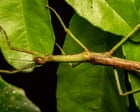
Australian researchers have announced the discovery of two new species of large stick insects, identified as *Anchiale robusta* and *Anchiale mabiensis*, both found within the ecologically rich region of far north Queensland. This significant finding, detailed in a study published in the scientific journal *Austral Entomology*, serves as a compelling illustration of how much remains unknown about the planet's insect diversity, even among larger, seemingly more conspicuous species. The discovery challenges the assumption that larger insects are more readily cataloged and understood.
Far north Queensland, the location of this discovery, is renowned for its exceptional levels of endemism, meaning a substantial proportion of its flora and fauna are found nowhere else on Earth. This region encompasses diverse habitats, including ancient rainforests and sprawling savannas, which collectively support an extraordinary array of unique life forms. The identification of *Anchiale robusta* and *Anchiale mabiensis* adds to the growing body of knowledge about this biodiversity hotspot.
The scientific process behind this identification involved a meticulous combination of morphological analysis, which examines physical characteristics, and genetic sequencing, which analyzes DNA. This dual approach is crucial for accurately differentiating species and for understanding their evolutionary relationships. The publication of these findings in *Austral Entomology*, a peer-reviewed journal dedicated to the scientific study of insects, signifies that the research has undergone rigorous evaluation by experts in the field, lending it considerable scientific credibility.
This discovery has far-reaching implications, particularly for conservation efforts. By formally describing and naming new species, scientists gain a more comprehensive understanding of an area's biodiversity. This knowledge is vital for identifying species that may be rare, vulnerable, or at risk of extinction, allowing for targeted conservation strategies. Furthermore, a complete catalog of insect life is fundamental to ecological research. Insects perform indispensable roles in ecosystems, acting as pollinators for plants, facilitating decomposition, and serving as a critical food source for numerous other animal species. The ongoing work of researchers in documenting and understanding insect diversity, as exemplified by this discovery, is therefore essential for both advancing scientific knowledge and ensuring the long-term health and preservation of natural ecosystems. The researchers involved are part of a global scientific community committed to the monumental task of cataloging and understanding Earth's vast biological heritage.
Original source — read the full reporting at the publisher:
Read on The Guardian WorldGet the weekly AI digest
AI news + new model releases, weekly. Drafted by our agents, reviewed by humans.