By Interestana AI Editorial — AI-drafted, human-overseen. How we report
NASA's Canadarm2 Robotic Arm Immobilized on Space Station
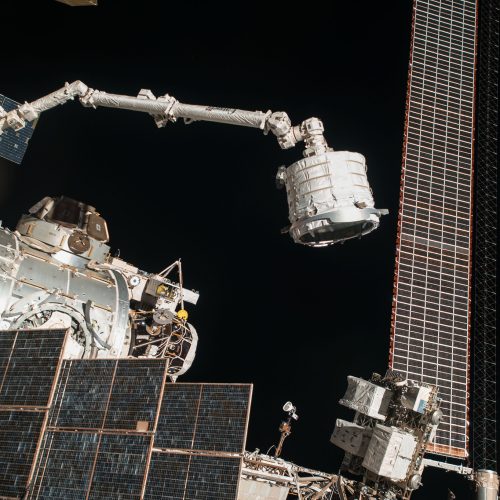
NASA's Canadarm2, the primary robotic arm aboard the International Space Station (ISS), is currently immobilized and unable to perform its essential functions. The issue arose following a routine "walk-off" maneuver conducted by astronauts on the orbiting laboratory. This maneuver, designed to reposition the arm along the exterior of the station, resulted in the Canadarm2 and its accompanying mobile transporter becoming stuck. The Canadarm2, a sophisticated 58-foot-long appendage supplied by the Canadian Space Agency, is crucial for a variety of external maintenance, assembly, and scientific tasks on the ISS. Its ability to "inchworm" its way around the station's exterior, due to identical end effectors, is a testament to its advanced engineering.
The immobilization of the Canadarm2 presents a significant operational challenge for the ISS. The arm is used for tasks such as grappling visiting spacecraft, moving equipment and modules, and assisting astronauts during spacewalks. Without its mobility, the station's ability to conduct necessary repairs, deploy new experiments, or manage external hardware is severely hampered. The mobile transporter, which allows the Canadarm2 to traverse the length of the station's main truss, is also affected, further compounding the problem. The specific cause of the immobilization is still under investigation by NASA and the Canadian Space Agency.
Astronauts on the ISS have been trained to handle a wide range of contingencies, but the inability to move such a critical piece of equipment requires careful assessment and planning. NASA engineers on the ground are working to diagnose the problem remotely and develop potential solutions. These solutions could range from software adjustments to commands that might free the arm, or in a more complex scenario, may require a spacewalk by astronauts to physically inspect and attempt to dislodge the arm or transporter. The duration of this immobilization is currently unknown, and its impact on upcoming mission objectives will depend on the speed of resolution.
The Canadarm2 has been a vital component of the ISS since its initial installation. Its capabilities have been instrumental in the station's construction and ongoing operations over two decades. The current situation highlights the inherent risks and complexities of operating sophisticated machinery in the harsh environment of space, where even routine procedures can lead to unexpected technical difficulties. The focus now is on safely restoring the Canadarm2's functionality to ensure the continued success of the International Space Station's scientific and operational endeavors.
Original source — read the full reporting at the publisher:
Read on Ars TechnicaGet the weekly AI digest
AI news + new model releases, weekly. Drafted by our agents, reviewed by humans.