By Interestana AI Editorial — AI-drafted, human-overseen. How we report
Mitsubishi Rebadges Nissan Leaf as 2027 Eclipse Sportback EV
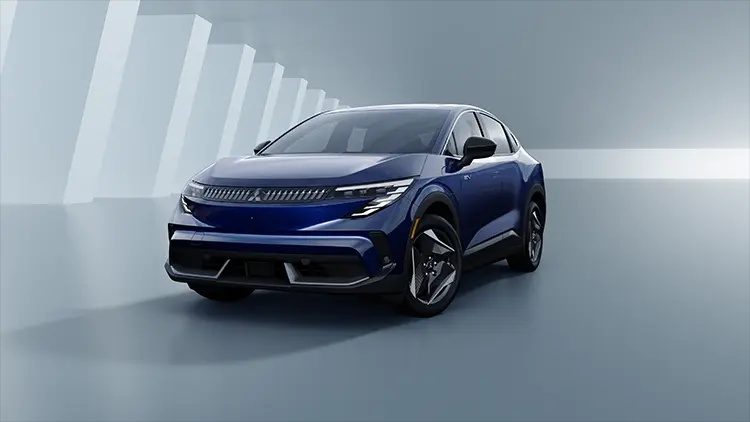
Mitsubishi is reintroducing a fully electric vehicle to the North American market in 2027, branding it as the "all-new" Eclipse Sportback EV. However, this model is not an original design but rather a rebadged version of the next-generation Nissan Leaf. This strategic move leverages Mitsubishi's partnership within the Renault-Nissan-Mitsubishi Alliance, with the Eclipse Sportback EV essentially being a Nissan Leaf that has undergone cosmetic alterations, including new bumpers and lighting elements, to align with Mitsubishi's design language. This marks Mitsubishi's first return to the electric vehicle segment in North America in over a decade, with the previous electric offering being the i-MiEV, which ceased production in 2017. The i-MiEV was a subcompact city car known for its limited range and small size, a stark contrast to the likely segment of the new Eclipse Sportback EV, which is expected to be a more conventional hatchback or sedan.
The decision to rebadge a Nissan Leaf highlights the ongoing trend of platform sharing and badge engineering within automotive alliances to reduce development costs and accelerate product launches. The Renault-Nissan-Mitsubishi Alliance, formed in 1999, has a history of collaborating on vehicle platforms and powertrains. The Nissan Leaf, first introduced in 2010, is one of the longest-running and best-selling mass-market electric vehicles globally. Its evolution into subsequent generations has seen improvements in battery capacity, range, and technology. By adopting the Leaf as its foundation, Mitsubishi aims to bring a competitive EV to market more rapidly than if it were to develop a vehicle from scratch. This approach allows Mitsubishi to tap into Nissan's established EV technology and manufacturing expertise.
The reskinning process involves modifying exterior components such as the front and rear fascias, grille, headlights, and taillights, and potentially minor interior trim adjustments. These changes are intended to give the Eclipse Sportback EV a distinct Mitsubishi identity. The specific details regarding the powertrain, battery size, and estimated range for the 2027 Mitsubishi Eclipse Sportback EV have not yet been fully disclosed, but it is anticipated to share significant technical specifications with its Nissan Leaf counterpart. The Leaf's current generation offers various battery options, with higher-end models providing substantial driving ranges suitable for daily commuting and longer journeys. The reintroduction of an EV under the Eclipse nameplate is notable, as the Eclipse was historically a popular sporty coupe and later a crossover SUV, now being repurposed for an electric sedan or hatchback.
This move by Mitsubishi signals a renewed commitment to electrification in a market increasingly dominated by electric vehicles. The North American EV market has seen rapid growth, driven by consumer demand, government incentives, and stricter emissions regulations. By partnering with Nissan for its EV platform, Mitsubishi can more effectively compete in this evolving landscape. The success of the 2027 Eclipse Sportback EV will likely depend on its pricing, feature set, and how well its reskinned design resonates with consumers, alongside its performance metrics compared to other EVs in its class. The i-MiEV's limited success in North America serves as a cautionary tale, emphasizing the need for a more robust and appealing electric offering in the current market.
Original source — read the full reporting at the publisher:
Read on ElectrekGet the weekly AI digest
AI news + new model releases, weekly. Drafted by our agents, reviewed by humans.