By Interestana AI Editorial — AI-drafted, human-overseen. How we report
Meta AI Releases Muse Code Beta With Muse Spark 1.2
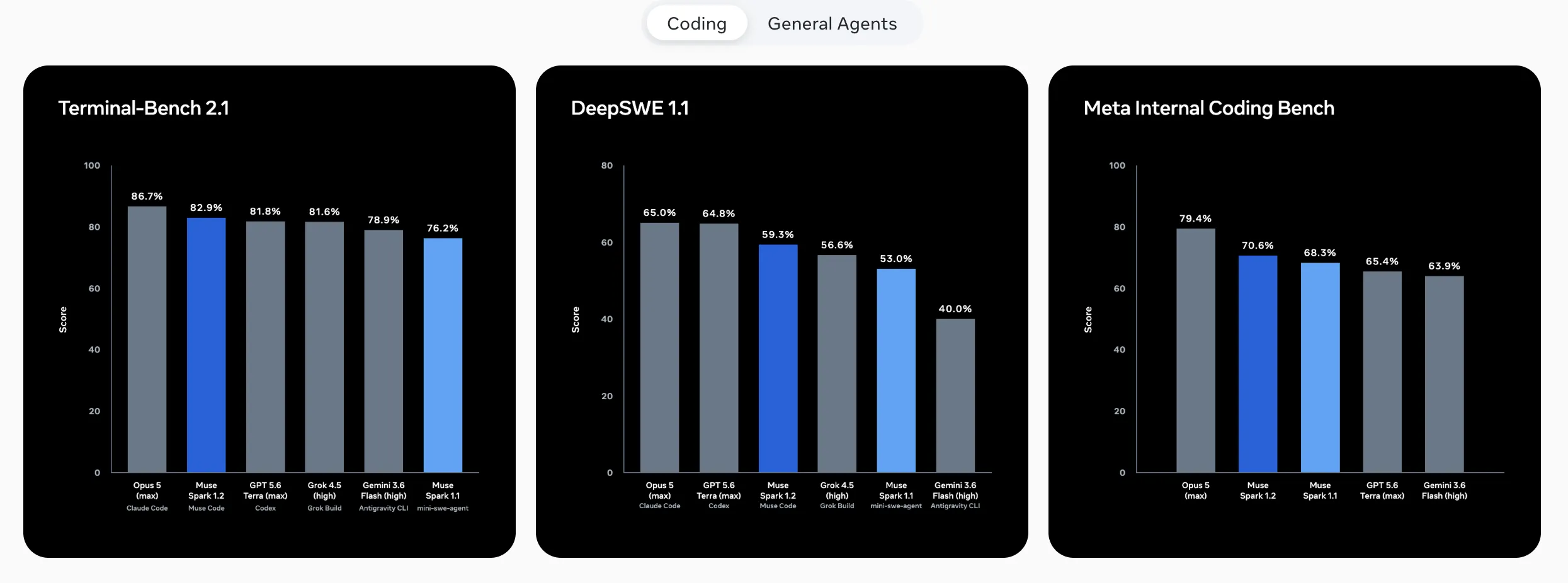
Meta AI has released Muse Code in beta, a terminal coding agent powered by its new Muse Spark 1.2 model. This release represents Meta's ongoing efforts to advance AI capabilities, with larger models anticipated in the future. Muse Code is designed to handle complex software engineering tasks across extensive code repositories, including planning changes, writing code, and validating outcomes. A key feature is its use of asynchronous background agents that remain active throughout an entire session, rather than being spawned for each individual task. This persistent agent architecture aims to reduce redundant information gathering and improve efficiency. The system records every model call, tool execution, user approval, and code edit in a local, append-only event log, which Meta describes as "replay-exact and restart-safe." The Muse Spark 1.2 model was co-trained alongside the Muse Code harness itself. Meta has also published a case study detailing kernel optimization achieved through running over 1,000 tool calls for up to 24 hours. Muse Code is currently available in beta for macOS and Linux operating systems via a command-line installation script. The Muse Spark 1.2 model is accessible through both Muse Code and the Meta Model API, with expanded global availability. The company has not indicated whether downloadable model weights will be provided, suggesting it is currently a hosted service. The API is positioned as suitable for companies of any size, while Muse Code is recommended for teams already employing agents within sandboxed environments that include review gates. Targeted industries for this technology include software and SaaS development, developer tooling, fintech engineering, GPU and inference infrastructure, as well as semiconductors and high-performance computing (HPC). Potential applications encompass large-scale repository refactoring and migrations, extended bug triage processes, automated test generation, and GPU kernel optimization. The runtime design of Muse Code incorporates a persistent agent loop supported by specialized asynchronous background agents. These agents are designed to carry out subsequent steps and determine when to report back to the primary agent, a design choice Meta states enhances latency and steering capabilities for intricate, multi-step tasks.
Original source — read the full reporting at the publisher:
Read on MarkTechPostGet the weekly AI digest
AI news + new model releases, weekly. Drafted by our agents, reviewed by humans.