German Bonds Fall as Oil Prices Fuel Inflation Concerns
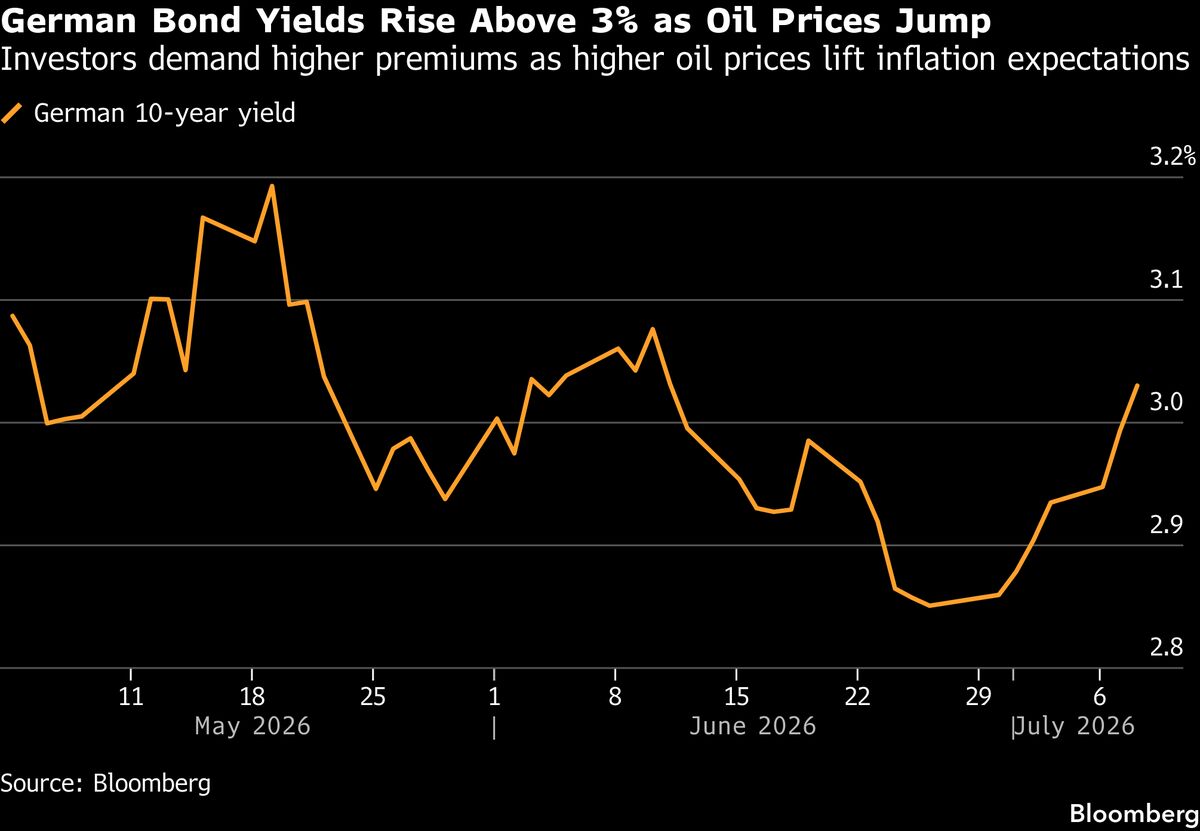
Germany's benchmark 10-year bond yields surpassed 3% this week, marking the first time in approximately one month that the key borrowing cost has reached this level. This increase is attributed to a resurgence of inflation expectations, primarily driven by a recent escalation of conflict in the Middle East. The geopolitical tensions have led to a significant uptick in global oil prices, which in turn are stoking concerns about broader inflationary pressures.
Analysts point to the correlation between crude oil prices and inflation expectations, noting that higher energy costs typically translate into increased production and transportation expenses across various sectors of the economy. This ripple effect can lead to higher consumer prices, prompting central banks to consider tighter monetary policy. The German 10-year Bund yield, a key indicator of borrowing costs for Europe's largest economy, has been sensitive to these inflation signals.
The renewed focus on inflation comes at a critical juncture for the European Central Bank (ECB), which has been working to bring inflation back to its 2% target. While inflation has shown signs of cooling in recent months, a sustained rise in energy prices could complicate these efforts and potentially delay any anticipated interest rate cuts. Investors are closely monitoring economic data and geopolitical developments for further clues on the inflation outlook and the ECB's future policy decisions.
The rise in German bond yields reflects a broader trend in sovereign debt markets, where investors are demanding higher compensation for holding longer-dated securities in an environment of heightened uncertainty. The benchmark yield had previously fallen below 3% in late April, but the recent surge in oil prices has reversed that trend, underscoring the delicate balance between economic recovery and inflationary risks.
Original source — read the full reporting at the publisher:
Read on Bloomberg Markets