By Interestana AI Editorial — AI-drafted, human-overseen. How we report
Europe's Summer Drought Threatens Desertification
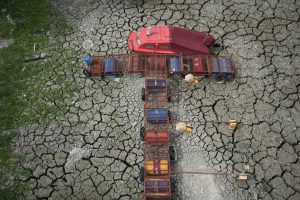
Europe is experiencing an extreme summer drought, leading to severe environmental and economic consequences, with desertification emerging as a significant threat. In northern Serbia, the Danube River's water levels have receded so drastically that small boats are stranded on cracked ground, leaving only shrinking ponds. Fisherman Dusan Jovanovic described the precarious situation for juvenile fish trapped in these shallow waters, where temperatures exceed 30 degrees Celsius (86 degrees Fahrenheit), risking mass die-offs. This persistent drought and heatwave have impacted various regions and sectors, including a lake in Slovenia, fish farms in Bosnia, the Czech Republic, Romania, and Hungary, and river traffic. The cumulative damage to the fish industry alone is estimated to be in the millions of euros, exacerbating existing challenges related to energy and water supplies, crop failures, and trade disruptions. The severity of the crisis has prompted countries and businesses to re-evaluate their preparedness for future extreme weather events, which scientists attribute to human-induced climate change. Hungary is particularly affected, with approximately 99% of its land experiencing severe or extreme drought conditions, according to its national meteorological service. The Great Hungarian Plain faces a substantial risk of desertification, a process characterized by vegetation loss due to high temperatures and low rainfall. Hungary's fish farming sector, which covers roughly 27,000 hectares (67,000 acres), has suffered immense losses. The Ministry of Agriculture and Food Economy reported that "persistent heat and water shortages" have caused 1,588 hectares (3,924 acres) of fish ponds to dry up. This has resulted in the death of nearly 280 metric tons of fish across 20 farms, with an estimated revenue loss of 1.3 billion Hungarian forints (approximately $3.5 million USD). The widespread impact extends beyond fish farms, affecting agricultural yields and the navigability of crucial European waterways like the Danube, a vital artery for trade and transportation. The European Environment Agency has previously warned about the increasing frequency and intensity of heatwaves and droughts in Europe, linking them to the broader patterns of climate change. The current situation underscores the vulnerability of the continent's ecosystems and economies to such extreme weather phenomena, highlighting the urgent need for adaptation and mitigation strategies.
Original source — read the full reporting at the publisher:
Read on FortuneGet the weekly AI digest
AI news + new model releases, weekly. Drafted by our agents, reviewed by humans.