By Interestana AI Editorial — AI-drafted, human-overseen. How we report
Bitcoin Holds Near $64K Amid Geopolitical and Economic Headwinds
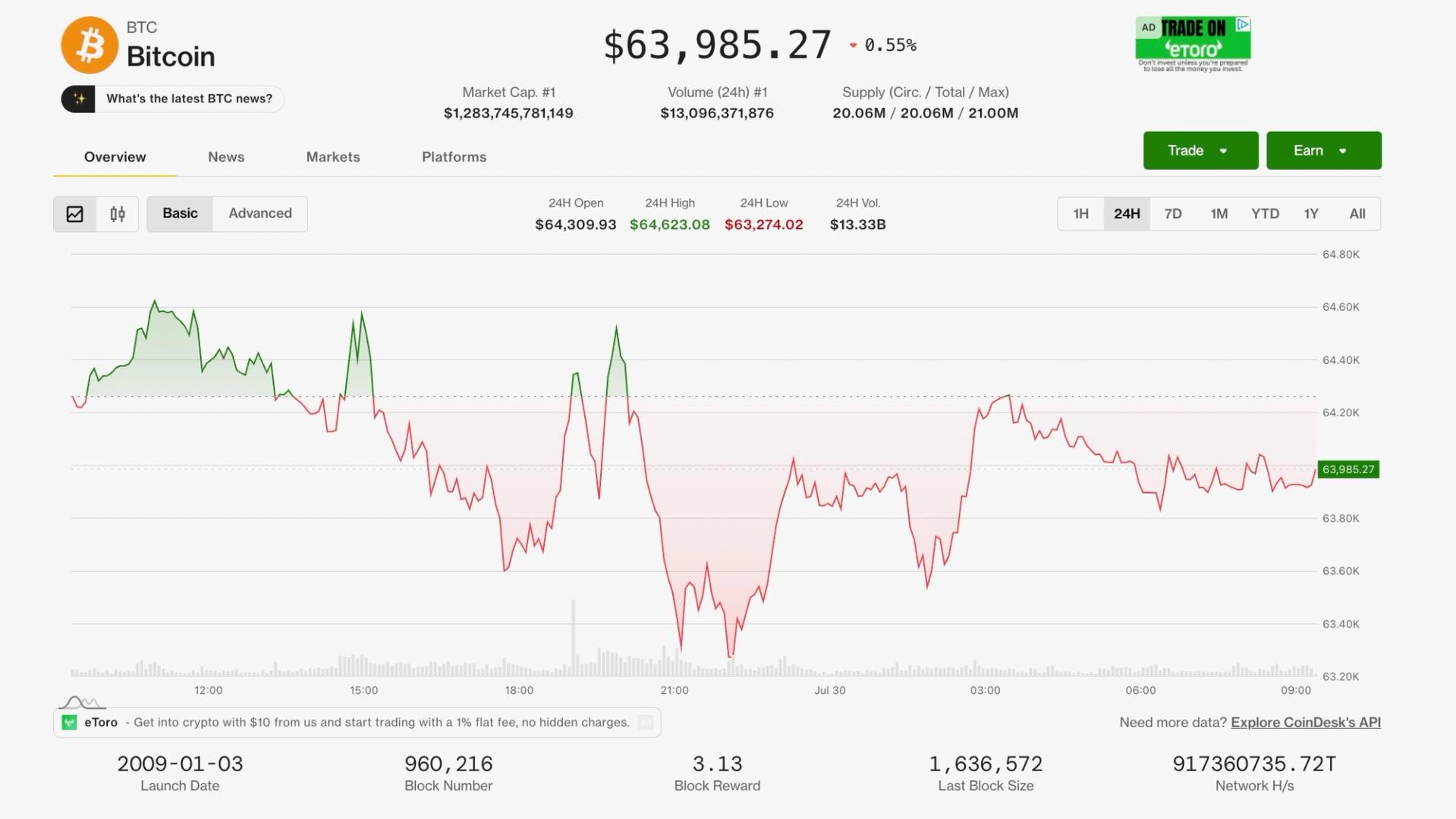
Bitcoin's price hovered near the $64,000 mark on Tuesday, demonstrating a degree of resilience amidst a confluence of significant global events. These included Iranian ballistic missile strikes, an overnight surge in oil prices by 8%, and a hawkish split within the U.S. Federal Reserve that suggested interest rates could still be subject to further increases. The broader financial markets reacted negatively to these developments, with the Dow Jones Industrial Average experiencing a 2.2% decline and the Nasdaq Composite index falling to a three-month low. The cryptocurrency market, often sensitive to macroeconomic shifts and geopolitical instability, showed a notable ability to absorb these pressures without a precipitous drop.
The surge in oil prices, particularly Brent crude, was a direct consequence of escalating tensions in the Middle East following Iran's missile launches. This increase in energy costs typically fuels inflation concerns, which in turn can prompt central banks to maintain or even tighten monetary policy. The Federal Reserve's recent communications indicated a divided stance among its policymakers regarding the future path of interest rates. While some members expressed a willingness to consider further rate hikes if inflation proves persistent, others advocated for holding rates steady. This uncertainty about monetary policy adds a layer of complexity for risk assets like cryptocurrencies.
Despite the negative sentiment in traditional equity markets, Bitcoin's ability to maintain its valuation suggests a decoupling or a different set of driving factors influencing its price. Analysts are observing whether this resilience is a temporary phenomenon or indicative of a more fundamental shift in how digital assets are perceived and integrated into investment portfolios. The cryptocurrency's performance in the face of such adverse conditions is being closely monitored by investors and market participants seeking to understand its role as a potential inflation hedge or a safe-haven asset, albeit one with its own unique volatility characteristics.
The broader implications of these events extend to the digital asset ecosystem. A sustained period of high oil prices and the potential for prolonged higher interest rates could impact liquidity and investor appetite for speculative assets. However, the current price action of Bitcoin suggests that demand remains robust, potentially driven by factors such as institutional adoption, ongoing technological developments within the blockchain space, and a growing narrative around digital scarcity. The coming weeks will be crucial in determining whether Bitcoin can sustain its current levels or if the combined pressures from geopolitical instability and monetary policy tightening will eventually exert a more significant downward force on its price.
Original source — read the full reporting at the publisher:
Read on CoinDeskGet the weekly AI digest
AI news + new model releases, weekly. Drafted by our agents, reviewed by humans.