By Interestana AI Editorial — AI-drafted, human-overseen. How we report
Goldfinches Flock to Grasslands in Autumn Display
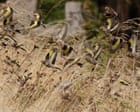
A significant gathering of approximately 200 juvenile goldfinches was observed in Priestcliffe Lees, Derbyshire, engaging in feeding activities within tall stands of tufted hair-grass. The birds, predominantly this year's young, were seen navigating through the vegetation, which was being thrashed by strong autumn westerlies. The hair-grass, standing over a meter tall, had been bleached beige by the summer heat, creating a dynamic backdrop for the flock's movements. The goldfinches were focused on consuming seeds from thistle and knapweed plants, which were located beneath the dense canopy of the hair-grass. This behavior highlights the ecological relationship between the birds and the specific plant species that provide their sustenance during this season. The juvenile goldfinches displayed distinct physical characteristics differentiating them from adult birds. Unlike their parents, the young birds lacked the characteristic red and black markings on their heads. Their underparts were described as dull and streaky, contrasting with the smooth mocha buff coloration of the adults. However, the juveniles possessed perfectly formed semi-circular yellow disks on their black wings, with each feather in the wing fan tipped with white. These markings are crucial for identification and likely play a role in their social interactions within the flock. The observation took place in a natural setting where the interplay of wind, vegetation, and wildlife created a vivid spectacle. The description emphasizes the 'explosion of movement' as the goldfinches roved through and over the swaying vegetation. This event underscores the importance of grassland habitats for supporting avian populations, particularly during transitional periods like autumn when young birds are establishing their feeding strategies. The specific location in Derbyshire, Priestcliffe Lees, is noted as the site of this natural phenomenon. The presence of such a large flock of juveniles suggests successful breeding in the preceding season and the availability of ample food resources in the area. The detailed description of the birds' plumage and feeding behavior provides valuable insights into their life cycle and adaptation to their environment. The scene captured by the observer illustrates the intricate balance of nature and the visual richness that can be found in rural landscapes when specific environmental conditions align. The observation serves as a reminder of the biodiversity present in the UK's countryside and the ongoing ecological processes that sustain it. The focus on juvenile birds also points to the generational cycle of wildlife and the challenges and opportunities faced by young animals as they mature and prepare for the coming seasons. The wind's action on the grasses is described as 'churning' the vegetation, adding to the sense of dynamic activity. The seeds of thistle and knapweed are identified as the primary food source, indicating the specific dietary preferences of the goldfinches. The contrast between the mature and immature plumage is a key detail, offering a clear visual distinction for ornithological observation. The white tipping on the wing feathers is highlighted as a notable feature of the juvenile birds. The overall scene is presented as a powerful visual and auditory experience, with the 'sound' of the flock also implied to be a significant element of the observation.
Original source — read the full reporting at the publisher:
Read on The Guardian EnvironmentGet the weekly AI digest
AI news + new model releases, weekly. Drafted by our agents, reviewed by humans.