By Interestana AI Editorial — AI-drafted, human-overseen. How we report
By-the-Wind Sailors Wash Ashore in Great Numbers
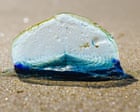
By-the-wind sailors, scientifically identified as Velella velella, have been observed washing ashore in significant numbers throughout the summer months on estuarine beaches. The author encountered a single specimen on the hot grit of an estuarine beach near Appledore, Devon, noting its striking bright blue coloration. This vivid hue initially led to a misidentification as a piece of plastic, possibly a discarded component of eyewear like goggles, due to its synthetic appearance. The organism's appearance is distinct from the more common natural beach finds such as mussel shells or the varied shimmer of sea glass. However, a moment of hesitation before attempting to pick up the object prompted the author to reconsider its origin, leading to the realization that it was not synthetic but biological, specifically an animal.
Velella velella are marine hydrozoans, belonging to the phylum Cnidaria, which also includes jellyfish and corals. They are pelagic organisms, meaning they live in the open ocean, and are often found floating on the surface. These creatures are characterized by a small, gas-filled float that allows them to remain buoyant. This float is typically triangular or oval and can be up to 10 centimeters (4 inches) in length. The sail-like structure, from which the common name "by-the-wind sailor" is derived, is a small, upright crest on the float that catches the wind, enabling the organism to drift across the ocean surface. The coloration of Velella velella can vary, but they are often described as having iridescent blue or purple floats and translucent, white or blue tentacles that hang below.
The unusual abundance of these hydrozoans on beaches suggests a potential shift in oceanic conditions or currents that are driving larger numbers of these surface-dwelling creatures closer to shore. While Velella velella are not typically considered harmful to humans, their presence in such large numbers can be a notable ecological event. Their diet consists of small planktonic organisms, which they capture using their tentacles. Reproduction in Velella velella can occur both sexually and asexually. The large aggregations observed may be linked to favorable environmental conditions for their reproduction and survival in the open ocean, followed by prevailing winds or currents pushing them towards coastal areas. The observation in Appledore, Devon, highlights a widespread phenomenon occurring across various coastal regions during the summer period, prompting interest in the ecological factors contributing to this increased presence.
Original source — read the full reporting at the publisher:
Read on The Guardian EnvironmentGet the weekly AI digest
AI news + new model releases, weekly. Drafted by our agents, reviewed by humans.