By Interestana AI Editorial — AI-drafted, human-overseen. How we report
China's Information Curbs Obscure Full Extent of Tibet Flood Devastation
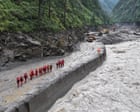
The full scale of devastation wrought by catastrophic flash floods in Nepal and Tibet, following the dramatic collapse of a massive Himalayan glacier, remains difficult to fully ascertain. While the disaster's impact is gradually emerging in Nepal, where reporters have gained access to affected areas, China's stringent information controls in Tibet are significantly impeding a comprehensive understanding of the situation. The event, triggered by a glacier breaking away from a mountaintop and cascading into a valley, has unleashed powerful floodwaters downstream, causing widespread destruction.
In Nepal, the unfolding narrative, albeit still incomplete, paints a grim picture of the damage. However, in Tibet, one of China's most politically sensitive regions, official media coverage has predominantly focused on highlighting rescue operations. This emphasis on relief efforts, while important, has come at the expense of detailed reporting on the extent of infrastructural damage, the destruction of homes, and the environmental consequences. This disparity in reporting underscores the challenges faced in obtaining accurate and timely data from Tibet, a direct consequence of China's established policies regarding information flow from its autonomous regions.
The lack of transparency from the Tibetan side complicates efforts by international observers and humanitarian organizations to effectively coordinate relief and aid. Without reliable damage assessments, the true needs of affected communities are obscured, potentially delaying or hindering crucial support. This situation raises concerns about the adequacy of the response within Tibet and the long-term recovery prospects for its inhabitants. The incident serves as a stark reminder of the vulnerability of high-altitude communities to climate change impacts, particularly glacial lake outburst floods (GLOFs), and the critical role that open and unfettered information dissemination plays in effective disaster management and humanitarian aid.
The contrasting approaches to media freedom and disaster communication between Nepal and China are starkly highlighted by this event. The full implications of the flood, including potential long-term environmental degradation and population displacement within Tibet, remain largely unknown due to these inherent information restrictions. Further updates are anticipated, but the limited access suggests that a complete understanding of the disaster's scope will likely be a protracted and potentially incomplete process.
Original source — read the full reporting at the publisher:
Read on The Guardian WorldGet the weekly AI digest
AI news + new model releases, weekly. Drafted by our agents, reviewed by humans.