By Interestana AI Editorial — AI-drafted, human-overseen. How we report
Nobel Prize Awarded for Chiral Chemistry Discoveries
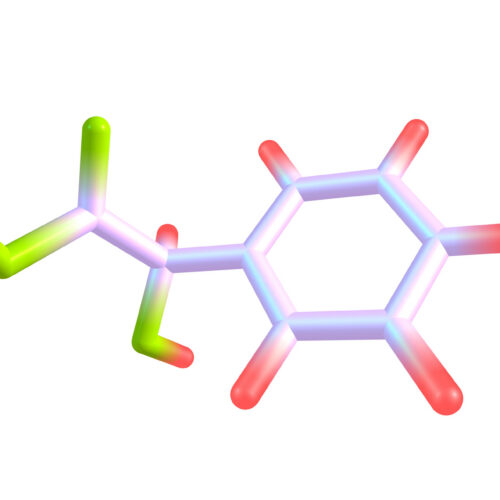
The Nobel Prize in Chemistry for 2023 has been awarded to Henri Kagan and Kenso Soai for their pioneering research into asymmetric synthesis, a field that allows for the selective production of one of two mirror-image forms of a molecule, known as enantiomers. This breakthrough is particularly significant for understanding the origin of life and for the pharmaceutical industry, where the specific handedness of a molecule can drastically alter its biological activity and safety. Most chemical reactions, when producing molecules with "handedness"—meaning they exist as non-superimposable mirror images—result in an equal 50-50 mixture of both the left-handed (L-enantiomer) and right-handed (D-enantiomer) forms. However, biological systems, including enzymes crucial for life, are highly selective and often utilize only one specific enantiomer. This selectivity presents a fundamental challenge for origin-of-life theories, which must explain how a primordial Earth, likely with an even distribution of enantiomers, gave rise to organisms that exclusively employ one form. The work of Kagan and Soai addresses this by demonstrating that chemical reactions can be biased to produce a significant excess of one enantiomer over the other. Henri Kagan, a French chemist, is recognized for his development of chiral catalysts, particularly those based on transition metals, which can direct reactions to favor the formation of a specific enantiomer. His research laid crucial groundwork for controlling stereochemistry in organic synthesis. Kenso Soai, a Japanese chemist, is credited with developing highly effective asymmetric catalysts, including organocatalysts, which have achieved exceptionally high enantiomeric excesses, sometimes exceeding 99%. His work has led to practical applications in synthesizing complex molecules with precise stereochemical control. The ability to produce enantiomerically pure compounds is vital for drug development, as different enantiomers of a drug can have vastly different therapeutic effects or even cause severe side effects. For instance, the tragic case of thalidomide in the mid-20th century highlighted the critical importance of controlling enantiomeric purity, as one enantiomer was a sedative while the other was a potent teratogen, causing birth defects. The discoveries by Kagan and Soai have enabled chemists to synthesize drugs and other biologically active molecules with greater precision and safety, significantly advancing fields such as medicine, agriculture, and materials science. Their work provides a chemical explanation for how life could have arisen from a racemic mixture of molecules, by establishing mechanisms for the preferential selection or synthesis of one enantiomeric form, thereby paving the way for the complex chiral machinery of biological systems.
Original source — read the full reporting at the publisher:
Read on Ars TechnicaGet the weekly AI digest
AI news + new model releases, weekly. Drafted by our agents, reviewed by humans.