By Interestana AI Editorial — AI-drafted, human-overseen. How we report
OpenAI Claims Secret AI Model Solved Math Problems
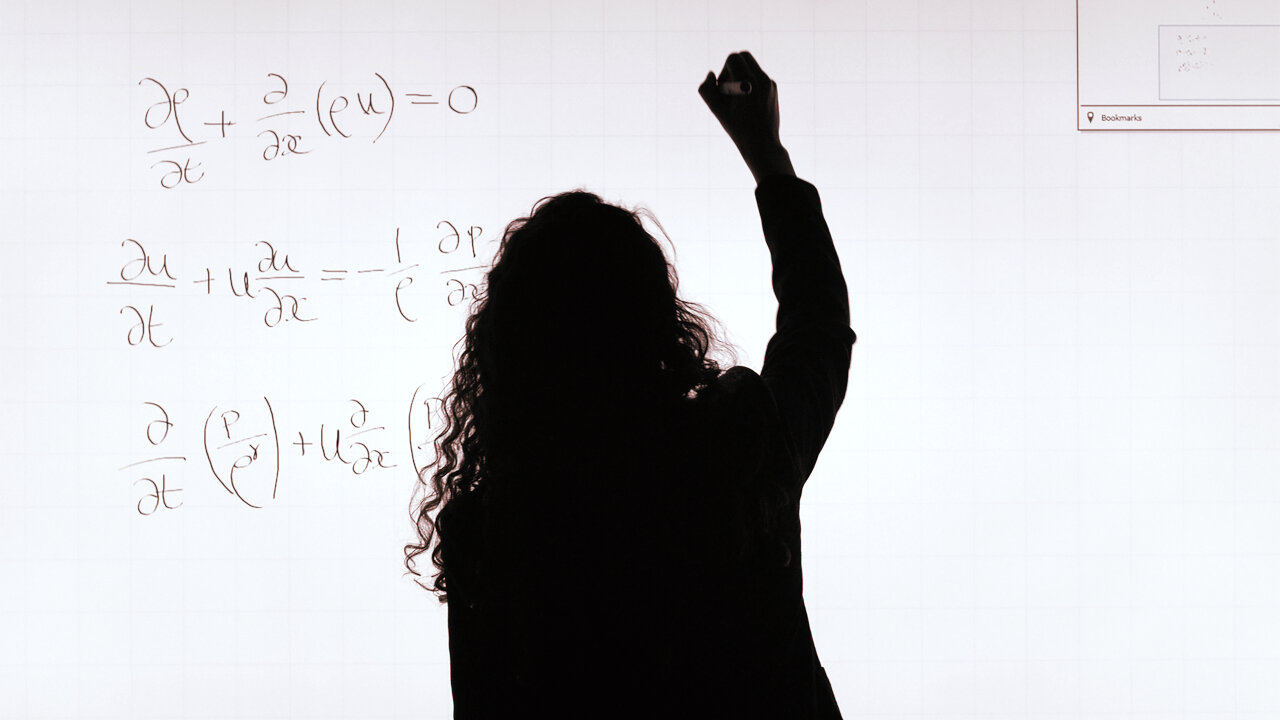
OpenAI has announced that an unreleased, secret artificial intelligence model has generated 722 mathematical manuscripts, with the majority reportedly derived from a single prompt. The company shared these manuscripts, which it claims demonstrate the AI's advanced reasoning capabilities in mathematics. However, the claims have been met with significant skepticism from the mathematical community, with some mathematicians calling for verifiable evidence to support OpenAI's assertions. The unreleased model's name and specific architecture have not been disclosed by OpenAI, adding to the opacity surrounding the announcement. The company stated that the AI's output represents a significant leap in its ability to tackle complex mathematical problems, a domain that has historically been challenging for artificial intelligence systems. The generated manuscripts cover a range of mathematical fields, though specific details about the complexity or novelty of the problems solved have not been extensively elaborated upon by OpenAI. The announcement was made via a blog post, where OpenAI detailed its findings and shared a selection of the AI-generated works. The company has indicated a willingness to share more information and potentially the model itself with the scientific community for further scrutiny, but the immediate response from mathematicians highlights a demand for rigorous peer review and independent verification. The development comes at a time when AI's capabilities are rapidly expanding across various disciplines, prompting ongoing discussions about its potential impact on research and discovery. The specific prompt used to generate the 722 manuscripts has also not been revealed, which is a key piece of information sought by researchers aiming to understand the AI's problem-solving process. The mathematical community's reaction underscores the importance of transparency and reproducibility in scientific claims, particularly when they involve groundbreaking AI achievements. Without independent validation, the extent of the AI's mathematical prowess remains an unverified assertion. OpenAI's previous models, such as GPT-4, have shown impressive capabilities in areas like coding and natural language processing, but advanced mathematical reasoning has been a more elusive frontier for AI. The company's ambition to push the boundaries of AI in theoretical fields like mathematics is evident in this announcement, but the path to acceptance by the scientific establishment requires more than just a declaration of success. The debate around AI's role in scientific discovery is intensifying, and this event serves as a focal point for discussions on how AI-generated research should be evaluated and integrated into the broader scientific discourse. The 722 manuscripts represent a substantial volume of work, and their purported origin from a single prompt suggests a highly efficient and powerful generative capability. The lack of immediate, concrete proof has led to cautious optimism mixed with considerable doubt among experts in the field, who are accustomed to a rigorous process of hypothesis testing and peer review. The future implications of AI in mathematics, if these claims are substantiated, could be profound, potentially accelerating the pace of mathematical discovery.
Original source — read the full reporting at the publisher:
Read on DecryptGet the weekly AI digest
AI news + new model releases, weekly. Drafted by our agents, reviewed by humans.