By Interestana AI Editorial — AI-drafted, human-overseen. How we report
Liz Larner Sculpts with Breath, Plastic, and Cosmic Inspiration in London Exhibition
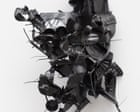
American sculptor Liz Larner is presenting her first major exhibition in the United Kingdom, titled "A Hard Line to Bend," at the prestigious Camden Arts Centre in London. Larner has established a reputation for her distinctive artistic practice, which involves transforming unconventional and often visceral materials into compelling and thought-provoking works of art. Her oeuvre consistently pushes the boundaries of traditional artistic mediums, demonstrating a profound interest in the inherent qualities and potential narratives embedded within diverse substances.
Among her notable past projects is the 1988 piece "Every Artist Gave a Breath." This ambitious work involved an international collaboration where artists from around the globe contributed their breath, which was then cultivated on agar plates. Larner described the resulting petri dishes as a fragile and dynamically evolving artwork, a testament to the biological processes at play. Over time, these cultures transformed in visually striking ways: some developed into "beautiful, dried wafers in colour," while others took on a "really weird blackish-green, really murky and a little scary" appearance. This piece exemplifies Larner's early engagement with biological phenomena and the ephemeral traces of human presence as integral components of her artistic expression.
In "A Hard Line to Bend," Larner continues her exploration of challenging materials by transforming single-use plastic into art that simultaneously evokes seductiveness and menace. This deliberate material choice is deeply rooted in contemporary environmental concerns. Larner explained that her engagement with plastic began when China, a major recipient of American plastic waste for recycling, ceased accepting shipments. The sheer volume of discarded plastic that subsequently accumulated in her studio became so overwhelming that she was compelled to suspend it from her ceiling, a powerful visual metaphor for the scale of the global waste crisis. Through her artistic process, Larner imbues these discarded materials with new aesthetic value and imbues them with critical commentary on consumption and waste.
Furthermore, Larner revealed a notable shift in her sources of inspiration. While her earlier work was heavily influenced by biological experiments, she is now drawing inspiration from NASA's striking images of asteroids. This evolution suggests a broadening of her thematic concerns, potentially bridging the vast, cosmic scale of space with the intimate, often overlooked aspects of human existence and the profound impact of environmental degradation. Her work consistently challenges conventional notions of what constitutes art materials, prompting viewers to contemplate the origins, implications, and transformative potential of the objects and substances that permeate our lives.
Original source — read the full reporting at the publisher:
Read on The Guardian EnvironmentGet the weekly AI digest
AI news + new model releases, weekly. Drafted by our agents, reviewed by humans.