British Swallowtail Subspecies Evolved 200,000 Years Ago
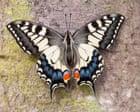
The British swallowtail butterfly, *Papilio machaon britannicus*, has been a distinct subspecies for at least 200,000 years, according to a new study. This finding significantly revises previous understandings of its evolutionary timeline. Previously, it was believed that the *britannicus* subspecies developed its unique characteristics during its isolation in the wetlands of eastern England over the past 8,000 years, following the submergence of Doggerland.
The endangered British swallowtail, which is primarily found breeding in the Norfolk Broads, is characterized by its smaller size and darker coloration compared to its continental counterparts. The earlier divergence date suggests a much longer period of independent evolution for this specific subspecies. This revised evolutionary history could have substantial implications for conservation strategies aimed at protecting the species.
Understanding the deep evolutionary roots of *Papilio machaon britannicus* is crucial for developing effective conservation plans. The study's findings indicate that the subspecies has maintained its distinct genetic lineage for a considerably longer duration than previously assumed. This extended period of separation likely contributed to its unique morphological traits and genetic makeup, differentiating it more profoundly from other swallowtail populations.
Original source — read the full reporting at the publisher:
Read on The Guardian World