By Interestana AI Editorial — AI-drafted, human-overseen. How we report
Freud Analyzes Mahler's First Symphony in Theatrical Performance
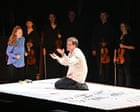
The Aurora Orchestra, led by Nicholas Collon, presented an innovative theatrical interpretation of Gustav Mahler's First Symphony at the Royal Albert Hall in London. This performance incorporated an acted prelude, conceived by Jane Mitchell, which delved into the composer's motivations and personal circumstances surrounding the creation of the symphony. The production effectively transformed the programme notes into a live, engaging experience for the audience, offering a "light touch, deep dive" into the genesis of a work that initially bewildered its first listeners.
Central to the theatrical element was actor Jack Bardoe portraying Gustav Mahler, embodying the composer's "frenetic energy and artistic neuroses." Bardoe's performance aimed to capture Mahler's own assertion that "everything about me is explained in this music." The setting was designed as a psychiatrist's office, where Sarah Twomey played a forthright Sigmund Freud, engaging Mahler in dialogue that explored the connections between his compulsion to compose and the re-enactment of childhood traumas. Freud's therapeutic approach sought to understand how Mahler's difficult upbringing, including paternal cruelty, the loss of eight siblings in infancy, and a "disastrous love affair," contributed to his complex inner world and artistic output.
Mahler's First Symphony, which premiered in Budapest in 1889, was met with significant criticism, described by detractors as "ridiculous," "offensively trivial," and "a complete disaster." The performance at the Royal Albert Hall aimed to contextualize these early negative reactions by providing a deeper psychological framework for understanding the symphony's intricate and often unconventional structure. The actors and musicians worked collaboratively to illustrate Mahler's statement that his personal experiences were intrinsically woven into the fabric of his music, suggesting that a close listening could reveal the composer's inner life. Ferdinand Pfohl, a contemporary of Mahler, had previously described the composer's work as "a bomb encased in razorblades," a sentiment that the performance sought to illuminate through psychological analysis.
The Aurora Orchestra's decision to perform the symphony from memory further underscored the commitment to a deeply integrated artistic vision. This challenging feat of musical recall allowed the musicians to focus more intently on the expressive nuances of Mahler's score, aligning their performance with the psychological narrative being presented. The overall production offered a multi-layered experience, combining rigorous musical performance with insightful dramatic exploration, thereby providing a novel perspective on a seminal work of the orchestral repertoire and the complex psyche of its creator.
Original source — read the full reporting at the publisher:
Read on The Guardian CultureGet the weekly AI digest
AI news + new model releases, weekly. Drafted by our agents, reviewed by humans.