By Interestana AI Editorial — AI-drafted, human-overseen. How we report
Terence Tao: AI Solves Math Problems Faster Than Humans
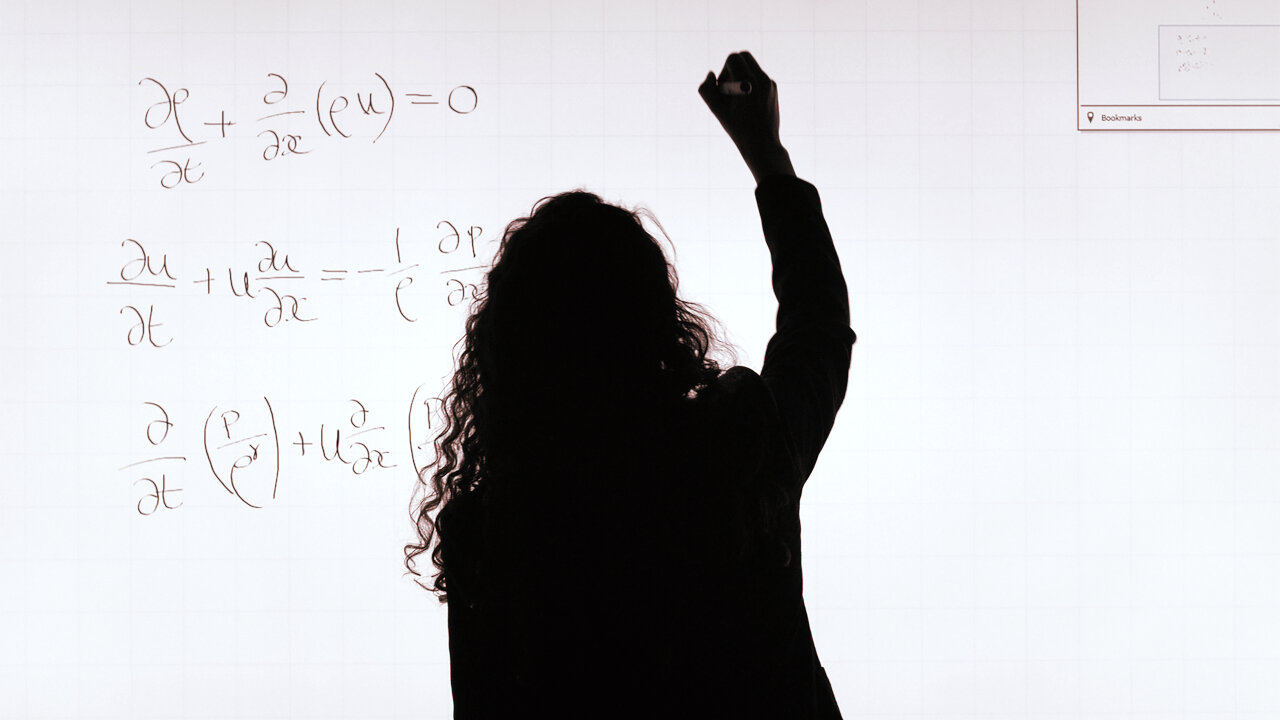
Fields medalist Terence Tao has issued a stark warning regarding the accelerating pace at which artificial intelligence is solving complex mathematical problems, suggesting that AI is now capable of solving a difficult problem the moment a human begins to work on it. Tao, a renowned mathematician often referred to as the "Mozart of Math," expressed his concerns in a recent commentary, drawing a parallel to the competitive landscape between leading AI research organizations like OpenAI and Anthropic. He posits that this intense competition is driving AI development to a point where it can rapidly advance solutions to mathematical challenges that were previously considered intractable or would require significant human effort and time to unravel.
Tao's observation points to a fundamental shift in the nature of mathematical discovery. Historically, mathematicians would grapple with problems for years, even decades, before a breakthrough. The advent of powerful AI models, however, introduces a new dynamic where AI systems can analyze vast datasets, identify patterns, and generate novel approaches at speeds far exceeding human cognitive capabilities. This rapid problem-solving ability, as highlighted by Tao, creates a scenario where AI might not just assist in mathematical research but actively lead it, potentially outpacing human mathematicians in their ability to even define and frame new problems. The implication is that the traditional pipeline of mathematical research, which relies on human intuition, creativity, and rigorous proof-building, is being challenged by an AI-driven paradigm.
The race between major AI developers, such as OpenAI and Anthropic, serves as a concrete example of this phenomenon. These organizations are investing heavily in developing increasingly sophisticated AI models, including large language models and specialized AI systems designed for scientific discovery. The pressure to achieve groundbreaking results in areas like artificial intelligence, which includes solving complex mathematical conjectures, is immense. Tao's commentary suggests that this competitive environment is accelerating the AI's capacity to tackle problems that were once the exclusive domain of human intellect. This rapid advancement raises questions about the future role of human mathematicians and the very definition of mathematical progress in an AI-augmented world. The speed at which AI can now 'flatten' a hard problem, as Tao puts it, signifies a potential paradigm shift in scientific research, where the bottleneck may no longer be the complexity of the problem itself, but the speed at which AI can be deployed to find solutions.
Original source — read the full reporting at the publisher:
Read on DecryptGet the weekly AI digest
AI news + new model releases, weekly. Drafted by our agents, reviewed by humans.