By Interestana AI Editorial — AI-drafted, human-overseen. How we report
Abbas condemns Israel’s ‘malicious colonial plan’ ahead of Netanyahu UN speech
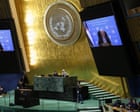
Palestinian leader Mahmoud Abbas delivered a significant video address on September 24, 2026, vehemently condemning Israel's actions as a "malicious colonial plan." He implored the international community to actively prevent the occurrence of another "Nakba," a term that translates to "catastrophe" in Arabic and refers to the mass displacement of Palestinians during the 1948 Arab-Israeli War. This powerful statement was issued in the immediate aftermath of reports that Abbas's delegation had been "unlawfully" denied visas by the administration of then-President Donald Trump, preventing their attendance at a crucial United Nations meeting of world leaders. The denial of these visas underscored the deep diplomatic rifts and heightened tensions surrounding the protracted Israeli-Palestinian conflict, particularly in light of ongoing military operations in Gaza and the persistent expansion of Israeli settlements in the occupied West Bank.
Concurrently, Israeli Prime Minister Benjamin Netanyahu was scheduled to deliver a highly anticipated and potentially controversial address to the United Nations General Assembly on the same day. His visit was characterized as a "lightning 12-hour visit," a brief but impactful trip to the international stage. Netanyahu's speech was widely expected to adopt a defiant tone, serving as a platform to reject international criticism directed at Israel concerning its war in Gaza and its continued settlement expansion in the West Bank. This policy of settlement expansion has been a consistent point of contention and a major obstacle to peace negotiations, often drawing condemnation from the international community and international bodies like the UN.
Even before Netanyahu's arrival, street protests had already commenced in New York City, signaling the significant public and political opposition to Israeli policies. These demonstrations reflected the deep-seated concerns and widespread disapproval of Israel's actions, especially regarding the humanitarian situation in Gaza and the ongoing occupation of Palestinian territories. The visa denial for Abbas's delegation further exacerbated these diplomatic frictions, highlighting the immense challenges in fostering dialogue and achieving a sustainable, peaceful resolution to the conflict. Abbas's invocation of the "Nakba" served as a stark reminder of historical grievances and signaled his profound apprehension about the potential for further Palestinian displacement and dispossession. His accusation of a "malicious colonial plan" directly challenged the legitimacy of Israel's settlement activities and its broader territorial aspirations in the West Bank, territories that Palestinians envision as part of their future state.
The United Nations, as a preeminent international forum, plays a critical role in addressing global conflicts and facilitating diplomatic resolutions. Netanyahu's address was poised to be a pivotal moment for Israel to articulate its official stance on the international stage amidst mounting international pressure and scrutiny. Abbas's preemptive condemnation, delivered via video, aimed to galvanize global support for the Palestinian cause and to proactively counter any narrative that the Israeli government might present at the UN.
Original source — read the full reporting at the publisher:
Read on The Guardian WorldGet the weekly AI digest
AI news + new model releases, weekly. Drafted by our agents, reviewed by humans.