By Interestana AI Editorial — AI-drafted, human-overseen. How we report
Jodrell Bank Faces Funding Crisis, Threatening UK Physics
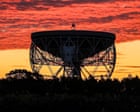
The Jodrell Bank Observatory, a globally recognized institution in radio astronomy, is currently facing a significant funding crisis. This financial strain poses a substantial threat to its continued operation and could result in the loss of highly skilled scientific personnel, potentially leading to a "brain drain" of physics expertise from the United Kingdom. The observatory's historical significance is deeply rooted in the pioneering work of physicist Bernard Lovell. In December 1945, Lovell began his research into cosmic rays at Jodrell Bank, utilizing army surplus radar equipment. His early observations led to the unexpected discovery of radio reflections from the ionized trails of meteors, marking the genesis of radio astronomy at the site.
Following this initial breakthrough, the Jodrell Bank team rapidly advanced their capabilities. By 1946, engineers had ingeniously mounted a radar system onto the base of a searchlight, granting them unprecedented access to track fast-moving meteors. This innovative approach laid the groundwork for future advancements. The observatory's most iconic instrument, the Lovell telescope, was completed in 1957, coinciding with a pivotal moment in space exploration: the launch of Sputnik. At the time of its completion, the Lovell telescope was the largest radio telescope globally and uniquely equipped to track the Soviet satellite, cementing Jodrell Bank's international reputation.
The current funding challenges at Jodrell Bank raise concerns about the future of British science and its contribution to national economic growth. The potential exodus of researchers and technicians could have far-reaching implications, not only for astronomical research but also for broader scientific and technological development within the UK. The observatory's legacy includes not only tracking early space missions but also contributing to fundamental discoveries in astrophysics and cosmology over decades. The loss of such a critical research facility and its associated talent pool would represent a significant setback for the UK's standing in the global scientific community. The precise details of the funding shortfall and the specific measures being considered to address it have not been fully disclosed, but the urgency of the situation is underscored by the potential for widespread impact on scientific careers and research projects.
Original source — read the full reporting at the publisher:
Read on The Guardian WorldGet the weekly AI digest
AI news + new model releases, weekly. Drafted by our agents, reviewed by humans.