By Interestana AI Editorial — AI-drafted, human-overseen. How we report
NASA Focuses on Mars Helicopters Amidst Lander/Rover Hiatus
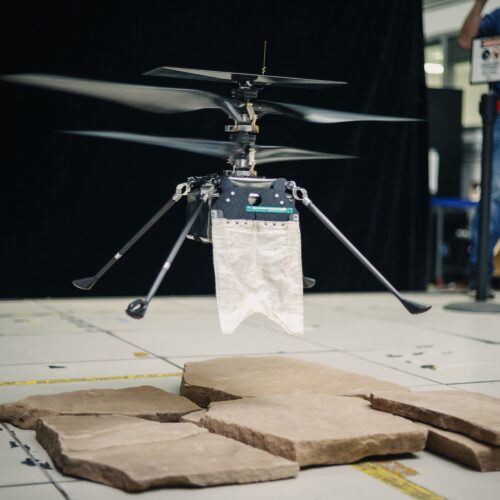
For the first time in over three decades, NASA currently has no concrete plans to deploy new landers or rovers to Mars. The agency's immediate strategic direction for Martian exploration centers on the utilization of aerial drones, a mode of scientific investigation that was considered improbable until recent years. The inaugural scientific deployment of drones on Mars is slated for the SkyFall mission, which comprises a trio of helicopters anticipated for launch as early as late 2028. These helicopters will journey to the red planet aboard NASA's Space Reactor-1 "Freedom" mission. The primary objective of the SR-1 Freedom mission is to showcase the capabilities of nuclear electric propulsion in the challenging environment of deep space. The proposed launch timeline for both SR-1 Freedom and SkyFall is notably ambitious, considering these projects were not part of NASA's official portfolio as recently as six months prior to their announcement. The SR-1 Freedom mission, with an estimated budget of $2.1 billion, intends to repurpose the central module of the previously canceled Gateway lunar space station. This repurposed module will serve as a crucial testbed for evaluating nuclear electric propulsion technologies. The SkyFall mission aims to build upon the significant achievements of NASA's Ingenuity helicopter. Ingenuity, an experimental rotorcraft, achieved a historic milestone in 2021 by becoming the first powered, controlled aircraft to achieve flight on another planet. This shift in focus highlights NASA's evolving approach to planetary exploration, prioritizing innovative aerial reconnaissance in the absence of traditional surface-based missions. The decision to forgo new lander and rover missions in the near term suggests a strategic reallocation of resources towards developing and deploying advanced aerial technologies, potentially paving the way for future complex robotic missions that leverage drone capabilities for reconnaissance and support. The success of Ingenuity has evidently demonstrated the viability and scientific potential of rotorcraft on Mars, justifying the investment in a more substantial helicopter-based mission like SkyFall. The integration of SkyFall with the SR-1 Freedom mission also indicates a trend towards multi-objective missions, where different technological demonstrations and scientific payloads are combined to maximize efficiency and scientific return from a single launch. The $2.1 billion cost for SR-1 Freedom underscores the significant investment required for developing and testing advanced propulsion systems, which are critical for future deep space exploration endeavors. The repurposing of the Gateway lunar space station module further emphasizes NASA's strategy of leveraging existing or previously developed hardware to accelerate new mission development and reduce costs. This approach allows for rapid prototyping and testing of critical technologies like nuclear electric propulsion, which could revolutionize travel times and mission capabilities for future interplanetary journeys. The absence of new lander and rover plans does not necessarily signify an end to surface exploration but rather a temporary pause while NASA invests in and validates new methods of accessing and studying the Martian environment from the air.
Original source — read the full reporting at the publisher:
Read on Ars TechnicaGet the weekly AI digest
AI news + new model releases, weekly. Drafted by our agents, reviewed by humans.