By Interestana AI Editorial — AI-drafted, human-overseen. How we report
Wildfire Forces Evacuation of NASA's Deep Space Network Complex in Spain
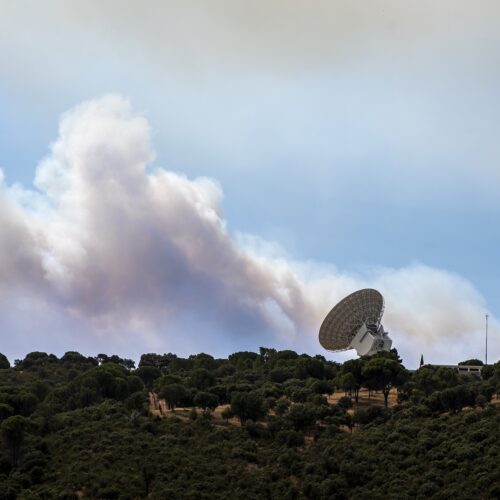
A fast-moving wildfire prompted the evacuation of NASA's Madrid Deep Space Communications Complex on Friday, leading to a temporary suspension of operations at the critical tracking station. This facility is a key component of NASA's Deep Space Network, which provides continuous global coverage for over 40 space missions by working in conjunction with similar stations in California and Australia. The network supports a wide range of missions, from lunar exploration like Artemis to deep space probes such as the James Webb Space Telescope and the Voyager spacecraft.
The wildfire, one of several active across Spain, approached the complex located approximately 40 miles (65 kilometers) west of Madrid. NASA confirmed the evacuation on Friday due to the ongoing wildfires in the region. Visual evidence from the area, including photos and videos, depicted flames and smoke rising above the ground station's antenna array. The complex features a prominent 230-foot-diameter (70-meter) radio dish alongside smaller 112-foot (34-meter) antennas, essential for maintaining communication with spacecraft.
The Deep Space Network's global reach is vital for tracking and commanding missions as Earth's rotation affects line-of-sight to celestial objects and deep space probes. The temporary disruption at the Madrid facility highlights the vulnerability of critical scientific infrastructure to environmental events and the importance of redundant systems for maintaining uninterrupted support for ongoing space exploration endeavors.
Original source — read the full reporting at the publisher:
Read on Ars TechnicaGet the weekly AI digest
AI news + new model releases, weekly. Drafted by our agents, reviewed by humans.