Research Explores How Animals Experience Time Differently
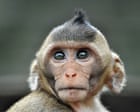
New research is exploring how animals perceive the passage of time, investigating whether their subjective experience of time differs from that of humans. This line of inquiry stems from existing scientific knowledge that animals already exhibit distinct sensory perceptions compared to humans, such as varying sensitivity to light wavelengths and sound frequencies. For instance, humans, bees, sparrows, and snails are known to process visual and auditory information differently.
The research group, as detailed in a recent review, poses the fundamental question of whether the "stream of experience" unfolds uniformly across different species. This means examining if the temporal dimension of consciousness is universal or species-specific. The study aims to understand the subjective reality of animals by considering how their unique biological and sensory apparatus might shape their perception of time.
By comparing the temporal experiences of animals like bees, sparrows, and snails with human perception, scientists hope to gain insights into the fundamental nature of consciousness and time. This research could reveal significant differences in how these creatures navigate their environments and process events, potentially influencing our understanding of animal cognition and behavior. The implications extend to how we interpret animal actions and their internal worlds.
Original source — read the full reporting at the publisher:
Read on The Guardian Environment