By Interestana AI Editorial — AI-drafted, human-overseen. How we report
Nigeria's PDP Faces Extinction After January Elections
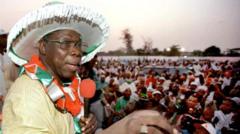
Nigeria's People's Democratic Party (PDP), once a dominant force in African politics, is facing an existential threat following the January elections, with projections indicating a potential wipeout of its political influence. The party, which governed Nigeria for 16 consecutive years from 1999 to 2015, has been grappling with severe internal schisms and a declining electoral performance that has eroded its once-unshakeable foundation. This period of political dominance saw the PDP secure victories in multiple presidential elections, including those won by Olusegun Obasanjo, Umaru Musa Yar'Adua, and Goodluck Jonathan, establishing a formidable national network and a deep reservoir of political capital. However, the party's fortunes began to shift significantly with the 2015 general elections, where it lost the presidency to the All Progressives Congress (APC), marking a historic transition of power.
Since then, the PDP has struggled to regain its footing, a situation exacerbated by a series of internal crises. Key among these are leadership disputes, factionalism, and a perceived disconnect from the electorate's evolving concerns. The party's inability to present a united front or a compelling alternative vision has allowed its political opponents to gain traction. Analysts point to a failure in adapting to the changing political landscape and addressing the socio-economic challenges facing Nigeria, such as insecurity, corruption, and economic instability. The January elections, in this context, represent a critical juncture, with the potential to further diminish the PDP's national presence and relegate it to a marginal political player.
The ramifications of such a decline would be profound for Nigeria's democratic architecture. A two-party system, or at least a system with two dominant parties, has historically provided a degree of stability and predictability in Nigerian politics. The weakening of the PDP could lead to a more fragmented political environment, potentially empowering smaller parties or leading to further consolidation within the ruling APC. Furthermore, the loss of a major opposition party could impact the quality of governance and accountability, as robust opposition is crucial for checks and balances. The PDP's historical significance as the party that ushered in Nigeria's current democratic era makes its potential decline a subject of considerable political analysis and concern for those invested in the nation's democratic future. The party's ability to navigate its internal conflicts and reconnect with its base will be crucial in determining whether it can avoid political extinction.
Original source — read the full reporting at the publisher:
Read on BBC World NewsGet the weekly AI digest
AI news + new model releases, weekly. Drafted by our agents, reviewed by humans.