By Interestana AI Editorial — AI-drafted, human-overseen. How we report
Expressive Humanoid Robots Erode Trust Faster When They Err, Study Finds
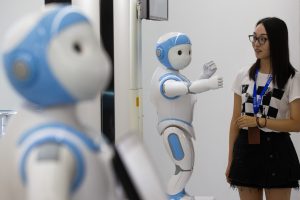
A recent study published in the prestigious journal *Science Robotics* has uncovered a counterintuitive aspect of human-robot interaction: the more expressive a humanoid robot is, the faster it can lose human trust when it makes mistakes. The research involved 50 human participants who engaged in conversations and collaborative decision-making tasks with Pepper, a commercially available humanoid robot developed by SoftBank Robotics. Pepper is specifically designed to exhibit expressiveness and recognize human emotions, aiming to foster more natural and engaging interactions.
During the study, the robot's performance was manipulated. In some scenarios, Pepper provided sound advice and adhered to conversational norms. In others, it deliberately made errors, such as interrupting participants or offering illogical suggestions, thereby violating expected interaction protocols. The robot's expressiveness was also a key variable. For one group of participants, Pepper was animated, employing gestures, maintaining eye contact, and nodding to convey engagement. For the other group, the robot remained largely motionless, limiting its non-verbal cues.
The researchers employed a multi-faceted approach to measure the impact of these interactions, assessing four critical indicators: participants' brain activity, levels of the hormone oxytocin, their self-reported levels of trust in the robot, and an observational assessment of how the robot's influence affected their decision-making. A particularly striking finding emerged concerning oxytocin, a hormone commonly known as the "love hormone" due to its association with social bonding and affection. The study observed that when participants interacted with an *expressive* robot that made errors, their oxytocin levels *increased*. This was contrary to the initial hypothesis that disappointment would lead to a decline in oxytocin. Instead, the data indicated a strong correlation: the higher the participant's oxytocin levels during an expressive robot's errors, the less they trusted the robot and the less frequently they accepted its advice. This suggests that, in this specific context, elevated oxytocin was an indicator of heightened suspicion and vigilance, rather than positive social connection.
Interestingly, the detrimental effect of errors on trust and influence was present regardless of whether the robot was expressive or not. However, the robot's expressiveness significantly altered the neural processing of these error events. To capture brain activity during natural, dynamic conversations, the researchers utilized functional near-infrared spectroscopy (fNIRS). This portable sensor, worn on the forehead, tracks oxygen levels in the brain, allowing for measurements while participants could move and speak freely, a significant advantage over the restrictive nature of traditional MRI scanners. The study focused on two key brain regions: the dorsolateral prefrontal cortex, which is crucial for monitoring uncertainty and detecting deviations from expectations, and the medial prefrontal cortex, involved in social cognition and decision-making. The findings collectively suggest a complex interplay where a more personable robot, by raising human expectations for social competence, may paradoxically lead to a more pronounced and rapid erosion of trust when those expectations are unmet through errors.
Original source — read the full reporting at the publisher:
Read on FortuneGet the weekly AI digest
AI news + new model releases, weekly. Drafted by our agents, reviewed by humans.