By Interestana AI Editorial — AI-drafted, human-overseen. How we report
TV Writers Predict Future Better Than Politicians
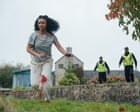
Cultural narratives, particularly within television dramas, frequently demonstrate a prescient ability to anticipate societal shifts and crises, often outperforming political discourse in their predictive accuracy. This phenomenon is exemplified by the BBC's apocalyptic drama, "The Rapture," which portrays the UK engulfed in a terrifying heatwave. The author observed a preview of the program in May, noting that its depiction of extreme weather would likely resonate more powerfully when it coincided with real-life conditions. By June, the UK was experiencing its highest recorded temperature for the month, making the show's themes feel remarkably prophetic. The lead actor, Ruth Madeley, was interviewed in a central London hotel where the ambient temperature made surfaces like door handles and street furniture dangerously hot, a tangible manifestation of the show's depicted climate crisis. The author reflected that the program's release seemed perfectly timed, a sentiment further amplified by subsequent heatwaves and wildfires in France by late July, underscoring the escalating reality of climate change.
The Daily Mail's reviewer expressed dissatisfaction with the portrayal of Christianity in "The Rapture," characterizing it as a bastion of anti-science fundamentalists and questioning whether a similar drama would depict Muslim imams in such a light. The author, however, suggests this critique misses the central point, viewing the religious element as a secondary aspect or even a thematic garnish to the overarching atmosphere of intense heat. This perspective highlights how cultural productions can tap into broader anxieties and emerging realities, even if specific elements are interpreted differently by various audiences. The article implicitly argues that the power of such dramas lies in their ability to reflect and amplify the zeitgeist, often before it is fully acknowledged or addressed by political bodies.
Another example cited is Apple's "Criminal Record," which explores the rise of the far right. This series, like "The Rapture," touches upon societal trends that are becoming increasingly evident in the real world. The narrative focus on the far right's resurgence suggests an artistic intuition for identifying and dramatizing significant socio-political movements. The article posits that while politicians may struggle to articulate or even recognize these emerging issues, television writers, through their creative exploration of fictional scenarios, often capture the essence of future challenges and societal transformations. This ability stems from a different kind of observation and interpretation of the world, one that can synthesize cultural currents and human anxieties into compelling narratives that resonate with audiences and, in retrospect, appear remarkably insightful.
The underlying argument is that the creative process in television writing allows for a more intuitive and less constrained exploration of potential futures. Unlike politicians, who are often bound by immediate political realities, electoral cycles, and established policy frameworks, writers can experiment with "what if" scenarios that push the boundaries of current understanding. This freedom enables them to identify nascent trends and potential consequences that might be overlooked in more pragmatic, policy-driven discussions. The effectiveness of these narratives in predicting future societal conditions suggests a profound connection between cultural storytelling and the collective subconscious understanding of where society is heading. The article implies that the entertainment industry, through its fictional explorations, can serve as an early warning system or a mirror reflecting the trajectory of human affairs with a clarity that often eludes formal political analysis.
Original source — read the full reporting at the publisher:
Read on The Guardian EnvironmentGet the weekly AI digest
AI news + new model releases, weekly. Drafted by our agents, reviewed by humans.