By Interestana AI Editorial — AI-drafted, human-overseen. How we report
AI Recommendations Drive Website Visits Unseen in Analytics
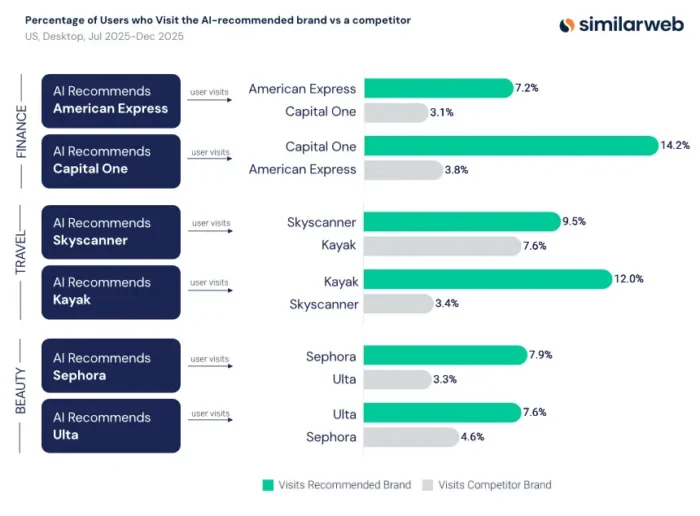
Brands recommended by ChatGPT are 2.5 times more likely to receive a website visit within seven days, according to new research from Similarweb. This significant uplift in traffic, however, often goes unmeasured by traditional analytics platforms because the majority of these AI-influenced visits do not originate from an identifiable AI referral. More than half of these visits arrive through search engines, meaning the initial AI influence is masked and appears as ordinary organic traffic. This presents a substantial challenge for marketers attempting to accurately assess the return on investment for AI-driven marketing efforts.
The research highlights a critical measurement gap where last-click attribution models, commonly used in digital marketing, can significantly underestimate the role AI plays in brand discovery and consideration phases of the customer journey. A typical user might query an AI chatbot like ChatGPT for a product recommendation, receive a brand suggestion, and then later conduct a direct search for that brand on a search engine like Google. While the subsequent website visit is recorded, the analytics system may not recognize that an AI recommendation initiated the customer's journey. This lack of direct attribution means that the true value of AI in driving initial interest and subsequent traffic is often overlooked.
Similarweb's study specifically tracked real user journeys to understand the downstream impact of AI recommendations. The methodology involved following users who had asked ChatGPT an industry-related question and subsequently received a specific brand recommendation. The researchers then monitored the behavior of these users over the following seven days. The findings indicate that AI visibility can effectively influence consumer behavior and drive traffic to websites without these visits being flagged as originating from an AI platform in standard reporting. This distinction is crucial for marketers, as it means that focusing solely on direct referrals or last-click attribution can lead to an inaccurate perception of AI's effectiveness and value.
To address this measurement challenge, marketers are urged to adopt broader measurement frameworks. These frameworks should be designed to account for AI's influence across the entire customer journey, not just at the point of conversion or direct referral. As AI search becomes an increasingly important channel for consumers to discover brands, understanding and quantifying its impact beyond direct attribution is paramount for effective marketing strategy and resource allocation. The current reliance on traditional analytics may be obscuring the significant role AI plays in shaping consumer intent and driving initial engagement.
Original source — read the full reporting at the publisher:
Read on Neil PatelGet the weekly AI digest
AI news + new model releases, weekly. Drafted by our agents, reviewed by humans.