By Interestana AI Editorial — AI-drafted, human-overseen. How we report
AI Deciphers Lost Languages Without Rosetta Stone
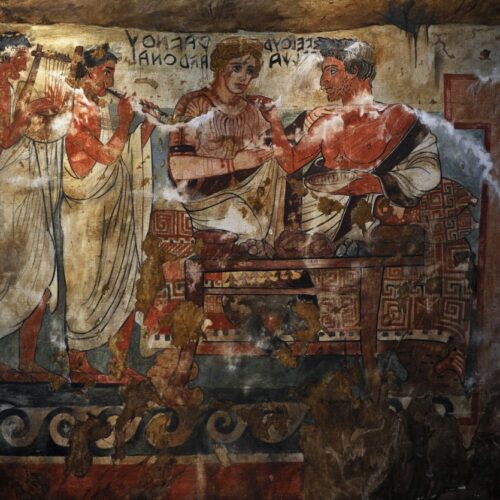
Artificial intelligence is being employed to tackle the formidable challenge of deciphering ancient languages that lack the crucial anchors traditionally required for linguistic breakthroughs. These anchors typically take the form of bilingual texts, such as the famed Rosetta Stone which enabled the decipherment of Egyptian hieroglyphs, or a known linguistic relative that provides a comparative basis for understanding. However, Linear A, the script of the Bronze Age Minoan civilization that flourished on the Greek island of Crete, possesses neither of these essential aids. Linguists classify Linear A as a "language isolate" due to its absence of any confirmed connection to any known language, whether extant or extinct. This unique characteristic has rendered it an exceptionally difficult puzzle for scholars over the past century. Similarly, Etruscan, a language spoken in Italy prior to the Roman Empire's ascendance, has also presented significant linguistic hurdles. While a partial lexicon has been compiled from numerous short funerary inscriptions, the grammar and more profound meanings of the Etruscan language continue to elude definitive understanding. The application of AI in this field represents a paradigm shift, moving beyond traditional comparative methods. Researchers are developing and deploying sophisticated algorithms capable of identifying patterns, structures, and potential phonetic values within the undeciphered scripts themselves. These AI models can process vast amounts of textual data, searching for recurring sequences, grammatical regularities, and potential semantic links that might be imperceptible to the human eye or mind, especially when dealing with limited or fragmented data. The goal is to uncover the underlying linguistic rules and vocabulary of these lost tongues, thereby unlocking insights into the cultures, histories, and societies that produced them. This endeavor is not merely an academic pursuit; the decipherment of ancient languages can illuminate trade routes, religious practices, social structures, and the intellectual achievements of past civilizations, enriching our understanding of human history. The success of AI in this domain could pave the way for deciphering other enigmatic scripts and texts that have remained inaccessible for generations, opening new frontiers in archaeology, linguistics, and historical studies. The development of these AI tools involves training them on known languages to understand linguistic principles, and then applying these learned principles to the unknown scripts, often in conjunction with contextual archaeological evidence. This interdisciplinary approach, merging computational power with human expertise, holds the promise of finally giving voice to ancient peoples whose stories have been silenced by the passage of time.
Original source — read the full reporting at the publisher:
Read on Ars TechnicaGet the weekly AI digest
AI news + new model releases, weekly. Drafted by our agents, reviewed by humans.