By Interestana AI Editorial — AI-drafted, human-overseen. How we report
Sex and Gender Meanings Evolve Amid Semantic Shifts
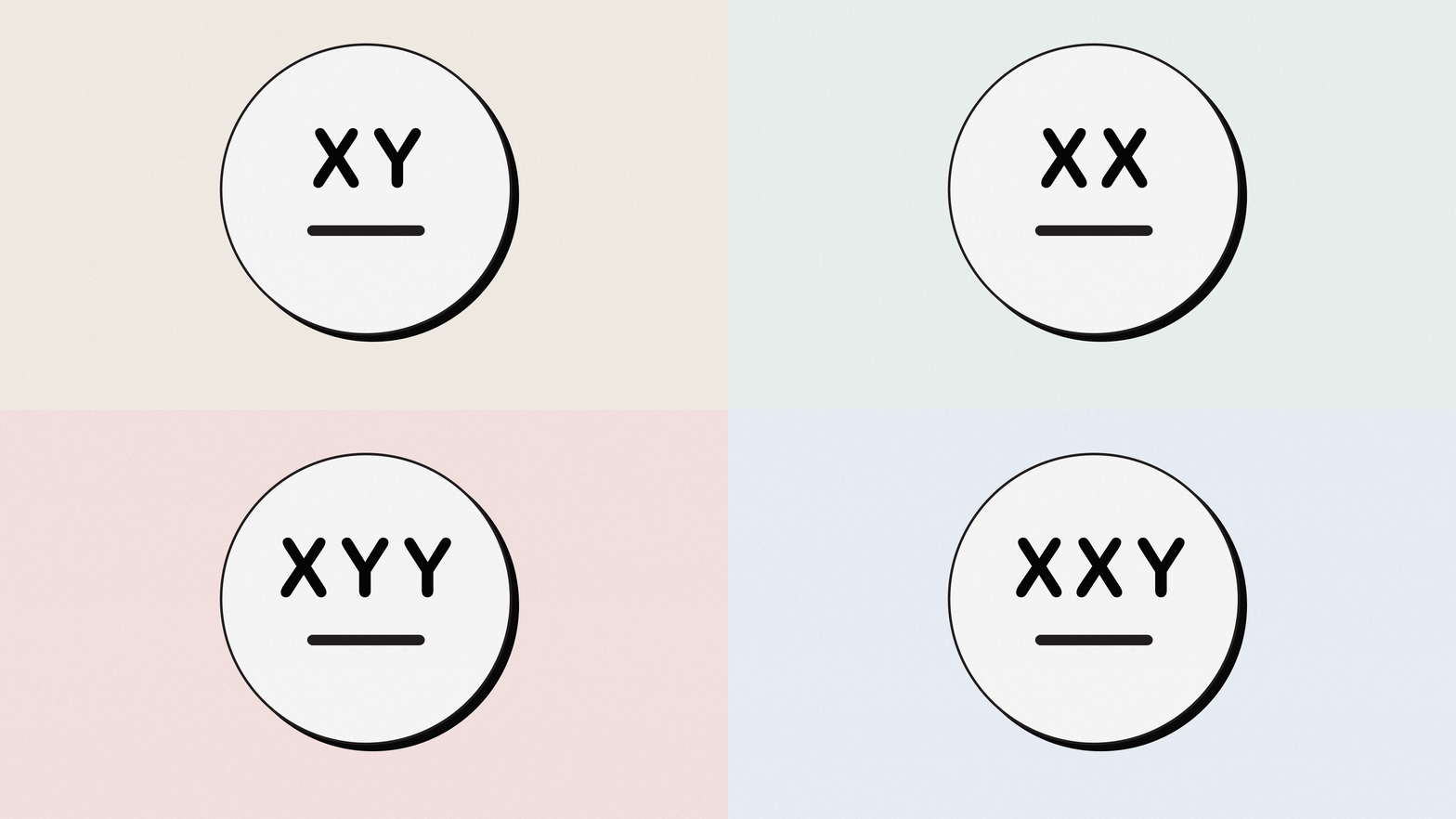
The terms 'sex' and 'gender' have undergone significant semantic evolution, leading to current complexities and ongoing debates about their precise meanings. Historically, 'sex' was primarily understood as a biological classification based on observable physical characteristics such as chromosomes, hormones, and anatomy, typically categorized as male or female. This biological definition was often seen as immutable and directly determinative of an individual's identity. However, scientific advancements, particularly in genetics and endocrinology, have revealed a more nuanced biological reality, demonstrating that sex itself exists on a spectrum, with variations like intersex conditions challenging binary classifications. These biological complexities have contributed to the broader re-evaluation of sex and gender.
Concurrently, the concept of 'gender' emerged as a distinct construct, referring to the social, cultural, and psychological aspects of identity. Gender encompasses roles, behaviors, expressions, and identities that societies associate with masculinity and femininity, which can vary significantly across cultures and historical periods. Unlike sex, which was traditionally viewed as biologically determined, gender has been understood as socially constructed and fluid. This distinction became central to feminist and queer theory, which argued that societal expectations and norms surrounding gender roles were not inherent but rather imposed and learned. The recognition of gender as a spectrum, independent of biological sex, has been crucial in understanding diverse gender identities, including transgender, non-binary, and genderfluid individuals.
The intersection of these evolving understandings has created a semantic landscape where 'sex' and 'gender' are often used interchangeably, misunderstood, or deliberately conflated, leading to confusion and contention. For instance, discussions around reproductive rights, healthcare access, and legal recognition frequently grapple with how to define and apply these terms. The scientific community itself continues to refine its understanding, with fields like evolutionary biology and anthropology providing new insights into the interplay of biological predispositions and social influences. This ongoing dialogue highlights the dynamic nature of language and how it adapts to reflect changing societal values and scientific knowledge. The challenge lies in navigating these evolving definitions to foster clearer communication and more inclusive societal frameworks, acknowledging both biological realities and the lived experiences of individuals across the spectrum of sex and gender.
Original source — read the full reporting at the publisher:
Read on The AtlanticGet the weekly AI digest
AI news + new model releases, weekly. Drafted by our agents, reviewed by humans.