By Interestana AI Editorial — AI-drafted, human-overseen. How we report
Butterfly Wing Patterns May Aid Evasion of Predators
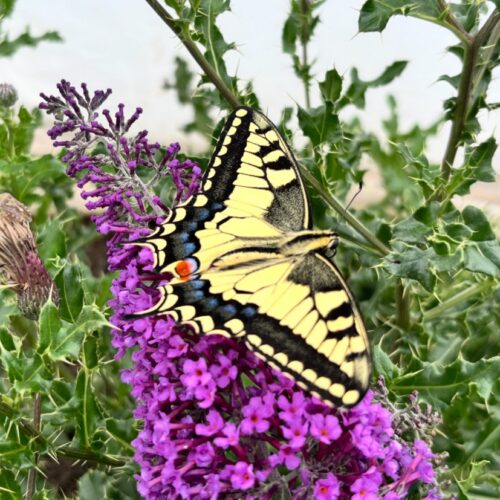
A new study published in the journal Nature proposes that the wing patterns and flight behaviors of butterflies may serve as a defense mechanism, similar to a well-known visual illusion associated with barbershop poles. This illusion, where humans perceive stripes on a rotating pole as moving upward instead of turning, is attributed to processing biases in human vision. Researchers suggest a comparable effect could explain how butterflies evade predatory birds. The stripes and spots on butterfly wings are theorized to interfere with the visual systems of predators, specifically their ability to accurately gauge speed and direction. This interference generates false motion cues while obscuring the butterfly's actual trajectory, according to co-author George Hancock of the University of Exeter. These visual illusions disrupt a predator's fundamental targeting system and can interfere with the final moments of an attack, known as the 'ballistic attack,' which occurs within tens of milliseconds. During this critical phase, predators commit to their strike and have insufficient time to alter their course, often resulting in missed prey. The study highlights how these visual disruptions can lead birds and other predators to miss their intended targets. Butterfly wings have been a subject of scientific fascination for decades, with early documentation of their growth dating back to 1938. More recently, in 2021, researchers at MIT successfully captured the continuous structural development of butterfly wings within the chrysalis on video for the first time. Butterfly wings are also recognized as a prime example of structural color in nature. Their vibrant, iridescent hues are not derived from pigment molecules but from structures that physicists refer to as photonic crystals. The scales on butterfly wings, composed of chitin—a polysaccharide abundant in insects—are arranged in a manner akin to roof tiles. This arrangement effectively forms a diffraction grating. However, unlike a standard diffraction grating that disperses light into its entire spectrum, photonic crystals are designed to produce only specific colors, or wavelengths, of light. This unique optical property, combined with their flight dynamics, is now posited to be a key factor in their survival against avian predators.
Original source — read the full reporting at the publisher:
Read on Ars TechnicaGet the weekly AI digest
AI news + new model releases, weekly. Drafted by our agents, reviewed by humans.