By Interestana AI Editorial — AI-drafted, human-overseen. How we report
Helium Baked Off Rocky Exoplanet Atmosphere
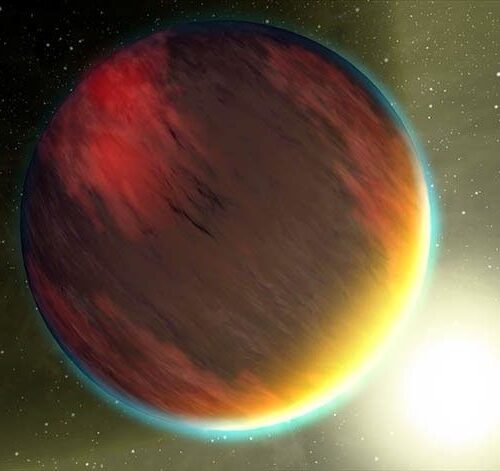
Helium has been observed escaping the atmosphere of the rocky exoplanet LHS 1140 b, located approximately 50 light-years from Earth. This finding, detailed in a study published in the journal Nature this week, provides empirical evidence for the loss of primordial hydrogen and helium envelopes from planets over billions of years. Planetary atmospheres are initially thought to be composed primarily of hydrogen and helium, but their composition can change significantly as planets evolve. Factors such as chemical reactions, atmospheric escape into space, planetary gravity, and the presence of a magnetic field all influence atmospheric retention. The proximity to a star also plays a crucial role, affecting atmospheric temperature and expansion, which in turn impacts the strength of gravitational influence.
The rate at which helium is being lost from LHS 1140 b allows scientists to infer details about the planet's remaining atmosphere. This observation is significant because it offers a direct look at the processes that may have shaped the atmospheres of terrestrial planets like Earth, Venus, and Mars, which are believed to have lost their original hydrogen/helium envelopes. Understanding these atmospheric dynamics on exoplanets helps refine models of planetary formation and evolution across the galaxy. The study's findings contribute to the ongoing effort to characterize exoplanetary atmospheres and identify potentially habitable worlds by understanding how they retain or lose their gaseous envelopes over astronomical timescales.
Original source — read the full reporting at the publisher:
Read on Ars TechnicaGet the weekly AI digest
AI news + new model releases, weekly. Drafted by our agents, reviewed by humans.