By Interestana AI Editorial — AI-drafted, human-overseen. How we report
Radiation Vest Successfully Flown to Moon and Back
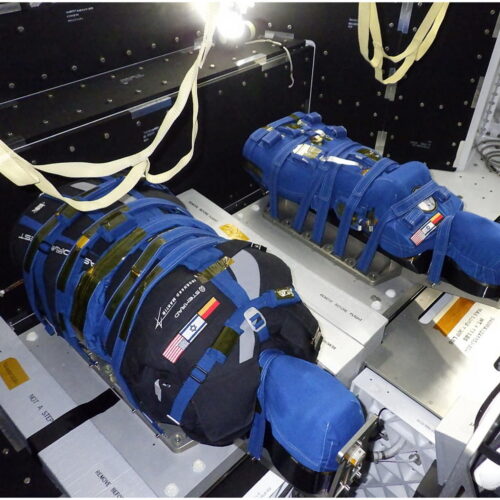
StemRad, an Israeli-American startup focused on developing personal protective equipment against radiation, has successfully flown its wearable radiation-shielding vest, named AstroRad, to the Moon and back. This significant test occurred aboard NASA's uncrewed Artemis I mission, which launched on November 16, 2022, and returned on December 11, 2022. The primary objective of this flight was to gather data on the vest's performance and potential effectiveness in shielding astronauts from the harmful effects of solar storms, a critical concern for future deep-space missions.
Solar storms, characterized by intense bursts of protons, pose a substantial risk to astronauts venturing beyond Earth's protective atmosphere and magnetic field. A notable example cited is the solar storm in August 1972, which occurred between the Apollo 16 and Apollo 17 missions. Such events can significantly increase an astronaut's cancer risk or lead to acute radiation sickness. Current spacecraft designs lack sufficient shielding to fully mitigate these dangers. StemRad's innovative approach, led by Jordan Houri and Oren Milstein, proposes shielding the astronauts directly with specialized vests rather than relying solely on heavily shielded spacecraft.
The data collected from the AstroRad vest's journey on Artemis I was subsequently used to calculate its projected performance during an actual solar storm event. According to StemRad's analysis, the vest would offer protection comparable to the onboard shelter within NASA's Orion spacecraft. This shelter was designed as a refuge for astronauts to await the dissipation of a solar storm. The successful completion of the lunar mission and the subsequent analysis suggest that AstroRad could provide a viable and more mobile solution for astronaut radiation protection, enhancing the safety of missions to the Moon and Mars.
The Artemis I mission itself was a crucial step in NASA's program to return humans to the Moon. It served as an uncrewed test flight of the Space Launch System (SLS) rocket and the Orion spacecraft, validating their performance in the challenging environment of deep space. The inclusion of the AstroRad vest as a payload allowed for real-world testing of advanced protective technology without human risk, providing invaluable insights for the development of future crewed missions. This demonstration marks a potential advancement in astronaut safety for long-duration space exploration.
Original source — read the full reporting at the publisher:
Read on Ars TechnicaGet the weekly AI digest
AI news + new model releases, weekly. Drafted by our agents, reviewed by humans.