By Interestana AI Editorial — AI-drafted, human-overseen. How we report
SpaceX Starship Reaches Orbit, Cuts Short Planned 10-Hour Flight
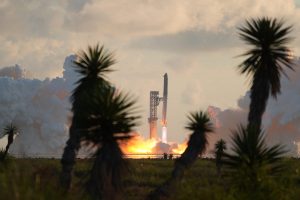
SpaceX successfully launched its Starship rocket into orbit for the first time on Monday, a significant milestone that also saw the deployment of 26 advanced Starlink satellites. The mission, however, was intentionally cut short, with the spacecraft scheduled for a splashdown in the Pacific Ocean north of Hawaii approximately three hours after its liftoff from Starbase, Texas. This marks a departure from the original plan, which aimed for a full 10-hour flight encompassing six orbits around Earth, a duration intended to demonstrate readiness for NASA's Artemis moon program. The mission faced an early challenge when one of Starship's engines shut down prematurely. Despite this setback, flight controllers proceeded with the launch after a period of tense deliberation, as the remaining engines performed adequately and the non-functional engine was not critical for achieving orbit. Mission Control announced the achievement of orbit to celebratory cheers. NASA Administrator Jared Isaacman commended SpaceX for its safe, responsible, and inspirational execution of the mission. The 26 Starlink satellites deployed are the latest and most advanced models, joining the existing constellation of over 11,000 satellites that provide internet service globally. These satellites were released one by one from the Starship spacecraft, eliciting further applause from SpaceX personnel at the launch site. The decision to terminate the flight early was made shortly after the satellite deployment, with no specific reason publicly provided by SpaceX. This was the 14th full-scale launch of Starship from its Texas facility over the past three years. Previous test flights had a more limited range, with some reaching the Indian Ocean but often ending in fiery crashes, and others only briefly skimming space. The current mission aimed for a higher orbital altitude of 170 miles (275 kilometers) and a prolonged flight duration. While Starship achieved the necessary orbital velocity of 17,500 mph (28,000 kph), flight controllers prioritized safety by initiating an earlier return, cutting the mission short after approximately three hours of flight. This cautious approach underscores the experimental nature of Starship development and SpaceX's commitment to incremental progress and risk management in its ambitious space exploration endeavors.
Original source — read the full reporting at the publisher:
Read on FortuneGet the weekly AI digest
AI news + new model releases, weekly. Drafted by our agents, reviewed by humans.